NFTs Beyond Art: 4 Innovative US Digital Culture Applications Expected to Surge by mid-2026
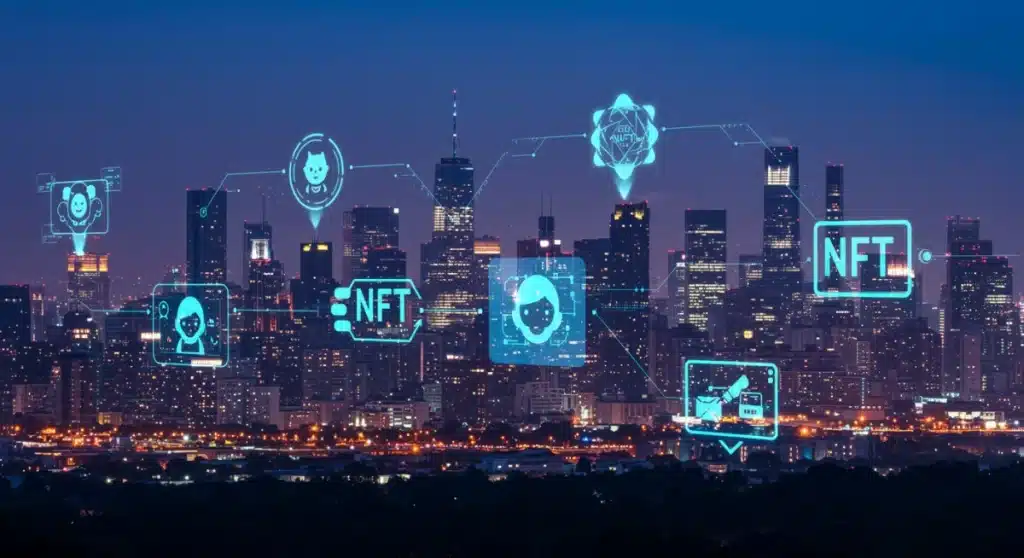
The Evolving Landscape of NFTs in US Digital Culture
The narrative surrounding Non-Fungible Tokens (NFTs) is rapidly shifting beyond their initial association with digital art.
Recent analyses indicate a significant pivot towards utility-driven applications within the US digital culture landscape, signalling a maturation of the blockchain-based technology.
This evolution is not merely speculative; it is underscored by increasing institutional investment and strategic partnerships across diverse sectors.
The expectation is that these innovative uses will redefine digital ownership and interaction, creating new economic paradigms by mid-2026.
Key industry players and venture capitalists are now actively backing projects that leverage NFTs for tangible value, moving away from purely speculative digital collectibles.
This strategic redirection highlights a robust belief in the long-term potential of NFTs Beyond Art.
Token-Gated Communities and Exclusive Access
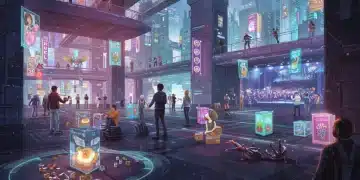
One of the most compelling applications emerging is the rise of token-gated communities, offering exclusive access to digital and physical experiences.
These communities leverage NFTs as membership passes, granting holders entry to private forums, events, and premium content.
This model fosters deeper engagement and creates a sense of belonging among members, while also providing creators with novel ways to monetise their offerings and build loyal fan bases.
The inherent scarcity and verifiable ownership of NFTs make them ideal for managing tiered access.
Early adopters in the US are already demonstrating the viability of this model, with several high-profile projects reporting substantial growth in membership and community activity.
This trend is set to accelerate as more creators and brands recognise the power of NFTs Beyond Art for building exclusive ecosystems.
The Mechanism of Token-Gating
Token-gating operates on smart contracts that verify ownership of a specific NFT before granting access to a particular resource.
This seamless, automated process removes the need for traditional subscription models or manual verification, enhancing user experience and security.
The utility extends to various domains, from professional networking groups to fan clubs and educational platforms.
The ability to instantly verify membership without intermediaries is a significant advantage, driving efficiency and trust within these exclusive circles.
Impact on Creator Economy
- Direct monetisation channels for creators.
- Enhanced community engagement and loyalty.
- New revenue streams through secondary market royalties.
- Reduced reliance on centralised platforms for content distribution.
Decentralised Autonomous Organisations (DAOs) and Governance
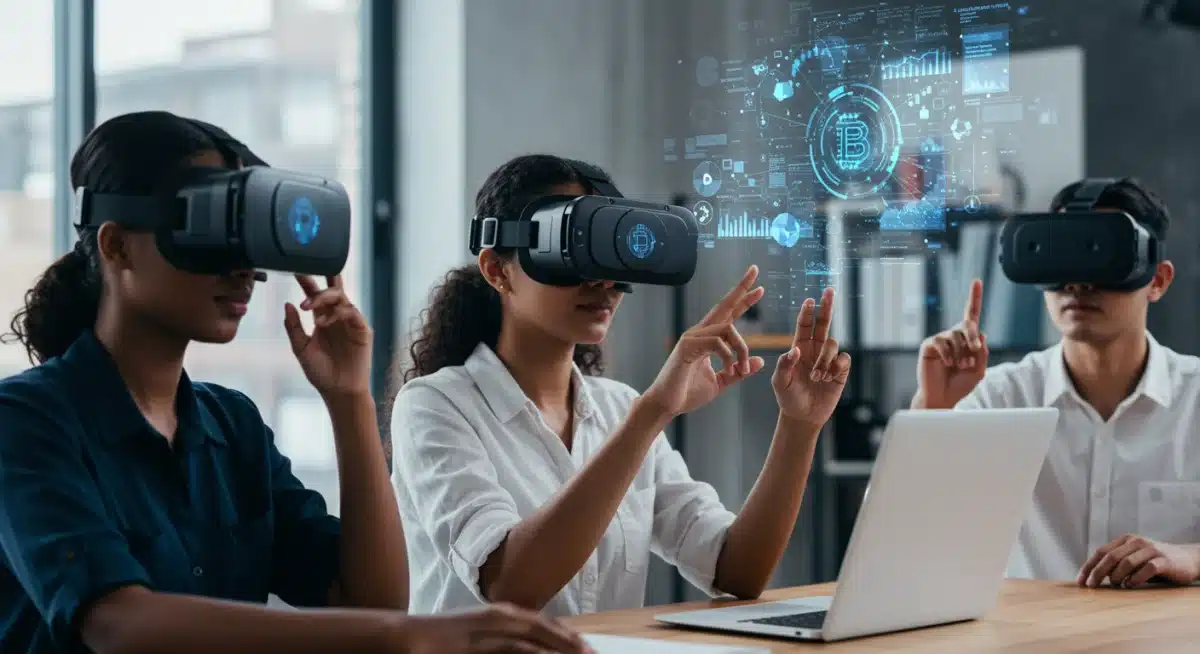
Decentralised Autonomous Organisations (DAOs) are gaining traction as a new paradigm for collective decision-making and project management, with NFTs playing a crucial role in their governance structures.
These organisations allow members to vote on proposals and allocate resources based on their NFT holdings.
The integration of NFTs into DAOs democratises power, ensuring that those with a vested interest in the organisation’s success have a say in its future direction.
This model promotes transparency and shared ownership, fundamentally altering traditional corporate hierarchies.
In the US, several innovative DAOs are experimenting with NFT-based voting systems, particularly within the Web3 and blockchain development sectors.
The surge in adoption here underscores a broader movement towards more equitable and community-driven governance, solidifying the role of NFTs Beyond Art in shaping future organisational structures.
NFTs as Governance Tokens
NFTs can represent voting rights, granting holders proportional influence over DAO decisions.
This approach moves beyond simple fungible tokens by allowing for unique governance roles or weighted voting based on the specific NFT’s attributes or rarity.
This adds a layer of complexity and nuance to governance, enabling more sophisticated decision-making processes.
The immutable nature of NFTs ensures that these governance rights are securely recorded and transparently exercised, fostering trust among participants.
Future of Collective Action
- Increased transparency in decision-making.
- Empowerment of community members through direct voting.
- Flexible and adaptable organisational structures.
- Potential for global, borderless collaboration.
Gaming and Metaverse Interoperability
The integration of NFTs into gaming and metaverse platforms is revolutionising digital ownership and player experiences.
Players can now truly own in-game assets, characters, and virtual land as NFTs, enabling them to trade, sell, or even transfer these assets across different platforms.
This interoperability breaks down traditional gaming silos, creating a more dynamic and player-centric digital economy.
The ability to carry digital possessions from one virtual world to another is a significant leap forward, enhancing the value and longevity of in-game investments.
Major US gaming studios and metaverse developers are actively exploring and implementing NFT solutions, anticipating a massive surge in this sector by mid-2026.
This trend highlights the critical role of NFTs Beyond Art in defining the next generation of immersive digital entertainment.
Play-to-Earn Models
NFTs are foundational to the burgeoning play-to-earn (P2E) gaming model, where players earn valuable digital assets through gameplay.
These assets, often NFTs, can then be sold on secondary markets, providing real-world economic opportunities for players.
This shifts the traditional gaming paradigm from pure consumption to active participation and ownership, attracting a new wave of players seeking both entertainment and financial reward. The P2E model, powered by NFTs, is poised for explosive growth in the US.
Virtual Land and Digital Real Estate
The concept of virtual land ownership, represented by NFTs, is thriving within metaverse platforms.
Users can purchase, develop, and monetise digital plots, creating businesses, hosting events, or building unique experiences within these virtual worlds.
This digital real estate market mirrors its physical counterpart in many ways, offering investment opportunities and creative freedom.
The verifiable ownership provided by NFTs is critical to the stability and growth of this emerging economy, making NFTs Beyond Art a cornerstone of the metaverse.
Digital Identity and Reputation Systems
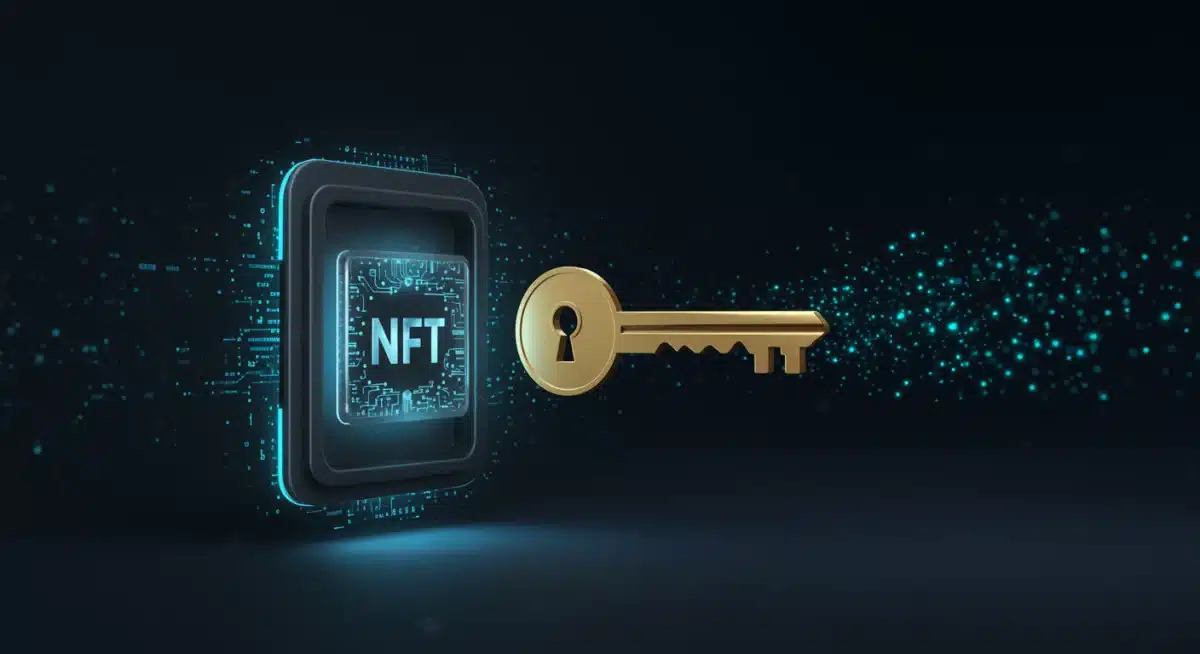
NFTs are poised to transform digital identity and reputation management, offering a decentralised and verifiable way to represent personal achievements, credentials, and online personas.
Unlike traditional centralised identity systems, NFT-based identities put control back into the hands of individuals.
Imagine owning an NFT that represents your academic degrees, professional certifications, or even your online social graph, all verifiable on the blockchain.
This system offers enhanced security, privacy, and portability of personal data, moving beyond siloed digital profiles.
US-based startups are actively developing solutions that leverage NFTs for self-sovereign identity and verifiable credentials, indicating a significant shift in how we manage our digital selves.
This application of NFTs Beyond Art promises to reshape online interactions and trust mechanisms by mid-2026.
Verifiable Credentials
NFTs can serve as verifiable credentials, proving ownership of skills, licences, or contributions without relying on third-party intermediaries.
This is particularly relevant for professional networking and employment verification, offering a more efficient and fraud-resistant system.
The immutability of blockchain ensures that these credentials cannot be tampered with, providing a high degree of trust.
This application is set to streamline many administrative processes and enhance the integrity of digital records, highlighting the practical utility of NFTs Beyond Art.
Decentralised Social Graphs
NFTs can also represent a user’s social graph and online reputation, allowing individuals to port their digital identity and connections across different platforms.
This counters the current model where social data is owned and controlled by large tech companies.
By owning their social data as NFTs, users gain more control over their online presence and can monetise their influence directly.
This innovation promises to foster a more equitable and user-centric internet, driven by the principles of NFTs Beyond Art.
Challenges and Regulatory Landscape
While the potential for NFTs Beyond Art is immense, the path to widespread adoption is not without its challenges.
Regulatory uncertainty remains a significant hurdle, with governments and financial bodies still grappling with how to classify and oversee these digital assets.
Security concerns, market volatility, and scalability issues also need to be addressed for these applications to reach their full potential.
The industry is actively working on solutions, but a clear and unified regulatory framework is vital for sustained growth and investor confidence.
Despite these obstacles, the innovative spirit within the US digital culture sector continues to drive development, pushing the boundaries of what is possible with blockchain technology.
The next few years will be crucial in shaping the regulatory environment and overcoming technical limitations for NFTs Beyond Art.
Navigating Legal Frameworks
The legal landscape for NFTs is fragmented, with different jurisdictions adopting varying approaches to their classification.
This creates complexities for developers and businesses operating in the space, particularly concerning taxation, intellectual property rights, and consumer protection.
Clearer guidance from regulatory bodies is anticipated as the market matures and the utility of NFTs Beyond Art becomes more apparent. Industry associations are actively engaging with policymakers to advocate for sensible and innovation-friendly regulations.
Technological Hurdles
- Scalability of blockchain networks.
- User experience and accessibility for non-technical users.
- Interoperability between different blockchain ecosystems.
- Security vulnerabilities and potential for exploits.
| Key Application | Brief Description |
|---|---|
| Token-Gated Communities | NFTs grant exclusive access to content, events, and forums, fostering loyal communities. |
| DAO Governance | NFTs represent voting rights and influence within decentralised autonomous organisations. |
| Gaming & Metaverse | True ownership of in-game assets and virtual land, enabling interoperability. |
| Digital Identity | Verifiable credentials and self-sovereign identity on the blockchain. |
Frequently Asked Questions about NFTs Beyond Art
The primary drivers are the inherent utility and verifiable ownership that NFTs offer, enabling new models for digital interaction, community building, and asset management. As the market matures, the focus shifts from speculative art to practical applications across various sectors within US digital culture, making NFTs Beyond Art a key trend.
Token-gated communities provide users with exclusive access to content, events, and private networks, fostering a strong sense of belonging and enhanced engagement. They also offer creators direct monetisation channels and build loyal fan bases, showcasing a significant aspect of NFTs Beyond Art.
In DAOs, NFTs often represent governance tokens, granting holders voting rights and influence over organisational decisions. This democratises power, promotes transparency, and enables collective project management, highlighting the innovative use of NFTs Beyond Art in governance models.
NFTs will revolutionise gaming by enabling true ownership of in-game assets and virtual land, fostering interoperability across different platforms. This supports play-to-earn models and creates dynamic digital economies, defining the next generation of immersive experiences and reinforcing NFTs Beyond Art.
Yes, NFTs can serve as verifiable credentials for academic achievements, professional certifications, and online reputation. This offers a decentralised, secure, and user-controlled approach to digital identity, enhancing privacy and portability of personal data, a crucial aspect of NFTs Beyond Art.
Looking Ahead: The Future of NFTs Beyond Art
The trajectory of NFTs Beyond Art indicates a profound shift in digital ownership and interaction.
What began as a niche art market is rapidly expanding into critical sectors, promising to redefine how we engage with digital content, communities, and even our own identities.
The coming years will see unprecedented innovation as these applications mature, attracting significant investment and mainstream adoption.
For individuals and businesses alike, understanding these emerging trends is paramount. The convergence of blockchain technology with everyday digital experiences is imminent, and those who adapt early will be best positioned to capitalise on the opportunities presented by NFTs Beyond Art.
Keep a close watch on regulatory developments and technological advancements, as they will heavily influence the pace and direction of this transformation.
The impact of NFTs Beyond Art extends far beyond mere digital assets; it represents a fundamental re-architecture of trust, ownership, and value in the digital realm.
As we approach mid-2026, these four applications are not just expected to surge; they are poised to become integral components of the modern digital landscape, offering a glimpse into a future where digital culture is truly decentralised and user-centric.