Podcast Journalism Trends: How US News Outlets Can Grow Audiences by 20% in 2026.

In 2026, Podcast Journalism has become the primary bridge for U.S. news outlets to reach new demographics.
This report outlines a strategic roadmap to achieve a 20% audience expansion by shifting toward audio-native narratives and data-driven distribution.
As digital audio consumption peaks, understanding these emerging trends is essential for news organizations aiming to convert casual listeners into loyal subscribers through innovation and editorial integrity.
The Current Landscape of Podcast Journalism in the US
The US podcast market is experiencing robust growth, driven by increased listener adoption and technological advancements. News outlets have a unique opportunity to leverage this momentum, but must adapt their strategies to stand out.
Listener demographics are diversifying, with younger audiences and various ethnic groups increasingly tuning in to audio content. This shift necessitates a broader approach to content creation and distribution for news organisations.
Understanding the competitive environment and the specific niches within podcasting is crucial for any news outlet seeking to expand its reach and secure a larger audience share.
Audience Demographics and Consumption Habits
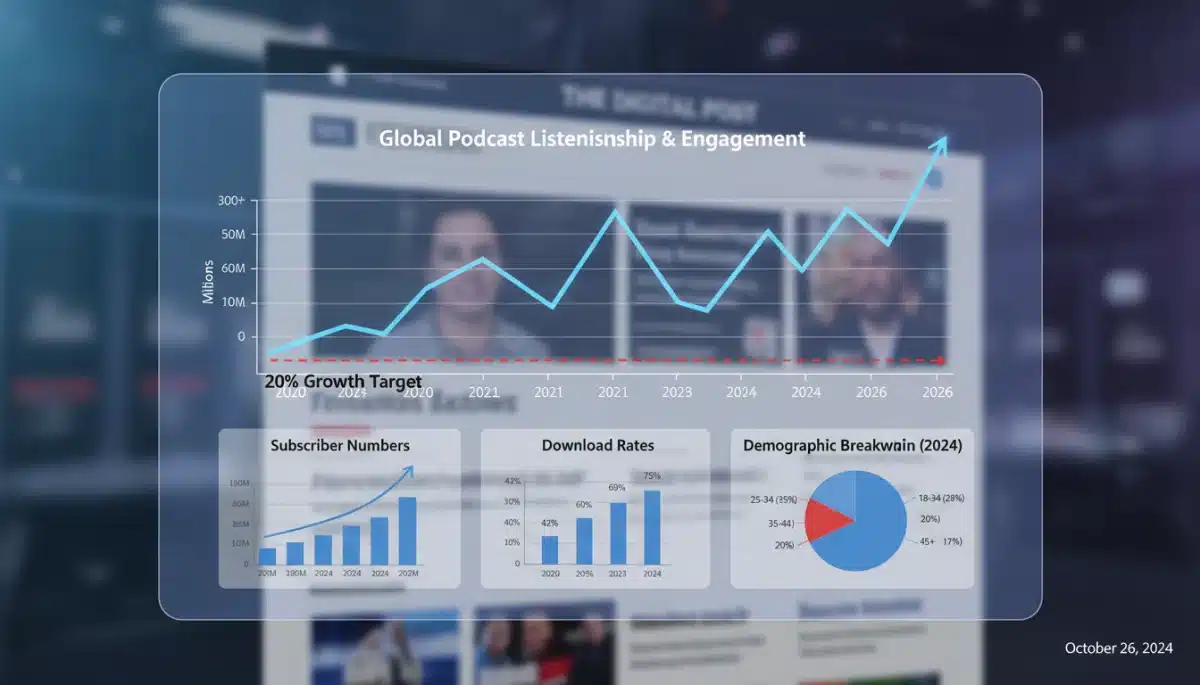
Recent data indicates a significant rise in podcast listenership across all age groups, particularly among millennials and Gen Z. These demographics often prefer on-demand, in-depth content that aligns with their values and interests.
Consumption habits reveal a preference for daily news briefings, investigative series, and narrative storytelling formats. Listeners are seeking both concise updates and longer-form analyses, often integrating podcasts into their daily routines.
- Daily listenership for podcasts has steadily increased over the past three years.
- The average listener subscribes to multiple news-related podcasts.
- Mobile devices remain the primary access point for audio content.
Furthermore, the rise of smart speakers and in-car entertainment systems is making audio content more accessible than ever. News outlets must consider these platforms in their distribution strategies.
Strategic Content Development for Audience Growth
To achieve a 20% audience increase by 2026, US news outlets must innovate their content development strategies. This involves moving beyond simply repurposing broadcast material and embracing audio-native storytelling.
Creating compelling, original content that resonates with specific listener segments is essential for attracting and retaining new audiences. This requires investment in skilled audio producers, sound designers, and engaging hosts.
The focus should be on building unique auditory experiences that cannot be replicated through other media, tapping into the intimate nature of audio. This is a core aspect of evolving Podcast Journalism Trends.
Embracing Audio-Native Storytelling
Audio-native storytelling leverages the unique strengths of the medium, focusing on soundscapes, voice modulation, and immersive narratives. This approach allows for a deeper connection with listeners, fostering loyalty and engagement.
News organisations should explore formats such as serialized investigative journalism, audio documentaries, and personal narratives that bring human elements to complex issues.
These formats have proven highly successful in capturing sustained listener attention.
- Invest in professional sound design and editing to enhance listener experience.
- Develop strong host personalities who can connect authentically with the audience.
- Experiment with diverse narrative structures, including multi-part series.
The authenticity and intimacy of audio storytelling can build trust and rapport, which are invaluable assets for news brands in the current media landscape. This direct connection is key to audience expansion.
Leveraging Data and Analytics for Targeted Reach
Data-driven insights are indispensable for understanding listener behaviour and optimising content strategies. US news outlets must proficiently analyse podcast metrics to effectively grow their audiences.
Tracking downloads, completion rates, subscriber demographics, and geographic distribution provides critical information for content refinement and marketing efforts. This analytical approach informs future production decisions.
By understanding what content performs best and why, news organisations can make informed decisions that directly contribute to their goal of a 20% audience increase by 2026.
This data-centric view is a significant component of modern Podcast Journalism Trends.
Understanding Listener Behaviour Through Metrics
Detailed analytics offer a window into listener preferences, revealing which topics resonate most and which formats retain attention. News outlets should move beyond basic download counts to deeper engagement metrics.
Analysing drop-off points within episodes can inform editing decisions and content pacing, ensuring that listeners remain engaged throughout. Understanding peak listening times can also guide release schedules for maximum impact.
Utilising listener surveys and feedback channels can complement quantitative data, providing qualitative insights into audience motivations and unmet needs. This holistic view is crucial for effective content strategy.

Distribution and Promotion Strategies for Wider Audiences
Effective distribution and promotion are as vital as content quality for expanding a podcast audience. US news outlets need a multi-platform strategy to ensure their journalistic podcasts reach potential listeners wherever they are.
Optimising for major podcast platforms, cross-promotion within existing news channels, and strategic partnerships are key components. A robust marketing plan ensures visibility in a crowded market.
Achieving a 20% audience growth target requires a proactive approach to getting content discovered and shared.
This involves both organic and paid promotional efforts across various digital touchpoints and aligns with current Podcast Journalism Trends.
Optimising for Discovery and Cross-Promotion
Ensuring podcasts are easily discoverable on platforms like Apple Podcasts, Spotify, and Google Podcasts is fundamental. This includes strong SEO for show titles and descriptions, as well as compelling cover art.
Cross-promotion across a news outlet’s existing platforms – website, social media, email newsletters, and even print – can significantly drive initial listenership. Leveraging the established audience of the parent brand is a powerful tool.
- Utilise social media campaigns with audio snippets and compelling visuals.
- Feature podcasts prominently on the news outlet’s homepage.
- Collaborate with other podcasts or media personalities for guest appearances.
Strategic partnerships with influencers or other media entities can also introduce podcasts to new, relevant audiences. This expands reach beyond the news outlet’s immediate ecosystem.
Monetisation and Sustainability in Podcast Journalism
For US news outlets, the long-term sustainability of podcast journalism relies on effective monetisation strategies.
Revenue generation not only supports production costs but also fuels further investment in quality content, contributing to audience growth.
Exploring diverse revenue streams, beyond traditional advertising, is crucial for building a resilient podcasting operation. This includes considering listener support models and premium content offerings.
A well-executed monetisation strategy allows news organisations to maintain editorial independence and continue producing high-quality journalism, which in turn attracts and retains listeners, supporting the 20% audience growth objective.
Exploring Diverse Revenue Streams
While dynamic ad insertion remains a primary revenue source, news outlets should investigate other models. Sponsorships from brands aligned with journalistic values can provide stable income without compromising content integrity.
Direct listener support, through platforms like Patreon or membership programs, fosters a deeper connection with the audience and provides a valuable revenue stream.
Offering exclusive content or early access to episodes can incentivise listener contributions.
- Implement programmatic advertising for broad reach and efficiency.
- Develop branded content or native advertising that aligns with editorial standards.
- Offer premium subscriptions for ad-free listening or bonus episodes.
Diversifying revenue sources ensures financial stability, allowing news outlets to continue investing in high-quality audio journalism. This is a critical factor in the evolution of Podcast Journalism Trends.
Technological Innovations and Future-Proofing Audio Content
Staying abreast of technological innovations is paramount for US news outlets aiming to future-proof their podcast offerings. Emerging technologies can enhance listener experience, streamline production, and open new distribution channels.
Investments in AI for transcription, translation, and content recommendations can significantly improve accessibility and discoverability. Adapting to new audio formats and interactive features keeps content fresh and engaging.
Embracing these advancements ensures that news outlets remain competitive and continue to attract a growing audience, aligning with the target of a 20% increase by 2026.
This forward-looking approach is central to enduring Podcast Journalism Trends.
AI, Personalisation, and Interactive Audio
Artificial intelligence offers immense potential for personalising the podcast experience, recommending content based on listener preferences, and even generating localised news updates. This enhances relevance and engagement.
Interactive audio elements, such as polls within episodes or choose-your-own-adventure narratives, can deepen listener involvement. These innovations transform passive listening into an active experience, fostering a stronger connection.
- Explore AI-driven tools for audio editing and content optimisation.
- Develop interactive features to increase listener engagement.
- Consider spatial audio for more immersive storytelling experiences.
The integration of these technologies will not only attract tech-savvy listeners but also improve the overall quality and reach of journalistic podcasts, solidifying their position in the digital media landscape.
Editorial Standards and Trust in Podcast Journalism
Maintaining rigorous editorial standards is non-negotiable for news outlets in podcasting. Trust is the bedrock of journalism, and its preservation in the audio space is critical for audience loyalty and growth.
Adherence to ethical guidelines, factual accuracy, and transparent reporting builds credibility with listeners. This is especially important in a medium where personal connection can sometimes blur lines between opinion and fact.
By upholding the highest journalistic integrity, US news outlets can differentiate themselves and attract an audience seeking reliable, verified information, thereby supporting the goal of a 20% audience increase by 2026.
These principles define credible Podcast Journalism Trends.
Upholding Integrity in Audio Reporting
Every journalistic podcast must undergo the same rigorous fact-checking and editorial review as traditional news reporting. Transparency about sources, methodologies, and potential biases is essential for building and maintaining listener trust.
News organisations should clearly distinguish between reported news, analysis, and opinion within their podcast offerings. This clarity helps listeners understand the nature of the content they are consuming.
- Implement a robust fact-checking process for all podcast content.
- Provide clear attribution for all sources and data presented.
- Train hosts and producers on ethical reporting in audio formats.
Investing in ethical training and editorial oversight ensures that journalistic podcasts not only entertain but also inform responsibly, reinforcing the news outlet’s reputation for accuracy and trustworthiness.
| Key Strategy | Description for Growth |
|---|---|
| Audio-Native Content | Develop unique, immersive audio stories that leverage the medium’s strengths. |
| Data-Driven Decisions | Utilise analytics to understand listener behaviour and refine content strategies. |
| Multi-Platform Promotion | Ensure wide discoverability and cross-promote across all media channels. |
| Ethical Reporting | Maintain high journalistic standards to build and retain listener trust. |
Frequently Asked Questions About Podcast Journalism Growth
Repurposing existing content requires adaptation, not just replication. News outlets should identify stories suitable for audio-native narration, adding behind-the-scenes insights or extended interviews. This creates value beyond print or video, aligning with Podcast Journalism Trends.
Host personality is crucial for building rapport and creating an intimate listening experience. Engaging, authentic hosts can foster a strong connection with listeners, turning casual listeners into loyal subscribers. Consistency in voice and tone is also key.
Video podcasting is gaining traction, especially on platforms like YouTube and Spotify. For news outlets, it offers an additional dimension for engagement and monetisation, appealing to visual learners and expanding reach. It complements, rather than replaces, audio-only content.
Listener feedback is invaluable for refining content and identifying new topic areas. Engaging with audience comments, emails, and social media mentions helps news outlets understand what resonates and what needs improvement, directly impacting growth strategies.
Key challenges include securing adequate funding, developing audio-specific storytelling skills, and standing out in a saturated market. Overcoming these requires strategic investment, talent acquisition, and a clear understanding of Podcast Journalism Trends and audience needs.
Looking Ahead: Sustaining Podcast Journalism Growth
The trajectory for Podcast Journalism Trends: How US News Outlets Can Grow Audiences by 20% in 2026 is clear: strategic investment in high-quality, audio-native content, coupled with data-driven distribution and unwavering editorial integrity, will define success.
News outlets must continue to innovate, adapting to technological shifts and evolving listener preferences.
The intimate connection fostered by audio offers a unique avenue for news organizations to rebuild trust and engage new demographics.
By embracing these trends, the goal of a 20% audience increase is not only achievable but essential for the future of journalism.
For a deeper understanding of current consumption habits and industry benchmarks, explore the latest podcasts and news fact sheet.