AI Art Trends: 3-Month US Creator Adaptations Analysis
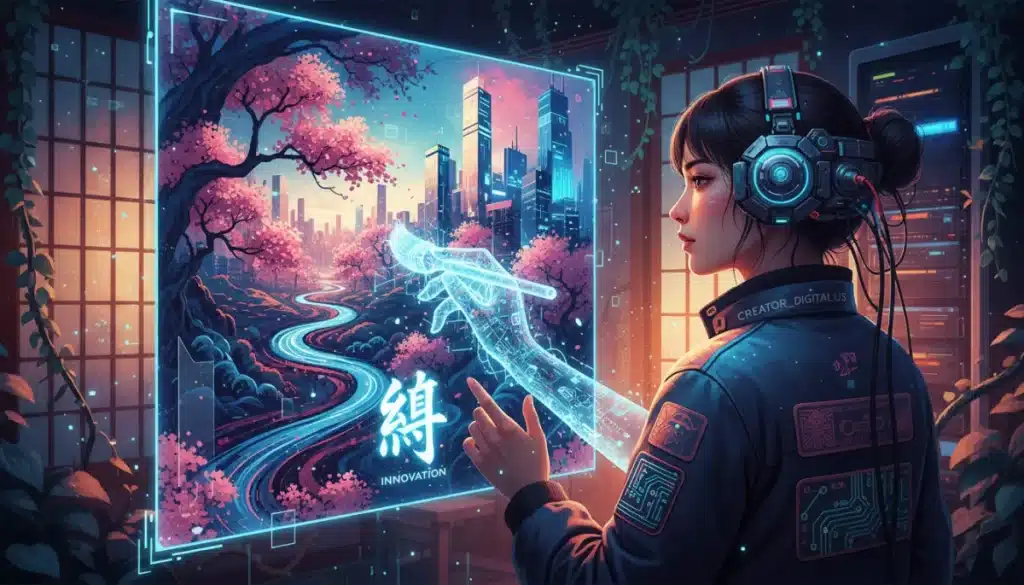
Recent shifts in AI art trends are rapidly reshaping the creative landscape.
This report delivers a direct, objective three-month analysis of how US digital creators are adapting to these tools, highlighting what has changed, why it matters, and what to monitor next as technology and policy evolve.
The Rapid Evolution of AI Art in the US
The landscape of digital art in the United States has undergone significant transformation over the past three months, driven largely by advancements in artificial intelligence.
This period has seen an unprecedented surge in the adoption and integration of AI tools by digital creators, fundamentally altering creative processes and output.
Initial data, gathered from various creator platforms and industry reports, indicates a clear shift in how artists approach their work.
The accessibility of AI-powered generation tools has lowered barriers to entry for many, while simultaneously presenting new challenges for established professionals.
This dynamic environment necessitates a thorough examination of these developments, providing context and verified analysis on the ongoing adaptations within the US digital art community.
Understanding these changes is crucial for anyone involved in or observing the digital creative sphere.
Creator Adaptations and Tool Integration
Digital creators across the US are actively exploring and integrating AI art tools into their workflows, moving beyond mere experimentation to establish new creative paradigms.
This widespread adoption reflects both the allure of enhanced capabilities and the necessity of staying current in a rapidly evolving field.
The past three months have shown a clear pattern of adaptation, with artists leveraging AI for tasks ranging from initial concept generation to intricate detail work.
This integration is not uniform; different creators are finding unique ways to harness AI, depending on their artistic style and professional goals.
This period has also highlighted the learning curve associated with these tools, as creators navigate the technical and ethical considerations inherent in AI art.
The ongoing dialogue within the community underscores the complexity of this technological shift.
Emerging AI Art Tools and Platforms
The market for AI art generation tools has expanded dramatically, offering creators a diverse array of options.
Platforms such as Midjourney, DALL-E 3, and Stable Diffusion have become central to many artists’ practices, each offering distinct features and stylistic outputs.
These tools are continuously updated, introducing new functionalities that further empower creators while also demanding constant learning.
The competitive nature of this software development means artists often have to choose between specialisation in one tool or broad familiarity with several.
- Midjourney: Noted for its aesthetic quality and ease of use in generating evocative imagery.
- DALL-E 3: Praised for its contextual understanding and ability to produce highly specific prompts.
- Stable Diffusion: Valued for its open-source nature and customisability, allowing for greater artistic control.
Shifting Creative Workflows
The integration of AI has directly impacted the traditional creative workflow, with many artists now incorporating AI at various stages.
This ranges from brainstorming and ideation to generating background elements or even entire compositions that are then refined manually.
This shift has allowed creators to accelerate certain aspects of their production, freeing up time for more conceptual or intricate finishing touches.
However, it also raises questions about authorship and the definition of ‘human-made’ art.
The evolving workflows demonstrate a symbiotic relationship between human creativity and artificial intelligence, where the AI acts as a powerful assistant rather than a complete replacement for artistic skill.
This collaborative model is becoming increasingly prevalent.
Impact on Digital Art Markets and Economy
The influx of AI-generated art has undeniably influenced digital art markets, introducing new dynamics regarding value, authenticity, and intellectual property.
Over the past three months, we have observed both challenges and opportunities arising from this technological shift.
For some creators, AI has opened doors to new revenue streams, enabling faster production of commercial assets or unique digital collectibles. Conversely, concerns persist regarding market saturation and the potential devaluation of human-created art.
Understanding these economic implications is vital for digital artists seeking to navigate this evolving market successfully. The ongoing comparison and analysis of these trends provide a clearer picture of the financial landscape.
New Business Models and Commercialisation
Digital creators are experimenting with innovative business models to capitalise on AI art capabilities.
This includes offering AI-assisted commissions, selling AI-generated assets, or creating hybrid artworks that combine human and machine input.
Platforms for selling digital art, such as NFTs, have also seen an increase in AI-generated content, prompting discussions about provenance and ownership.
The rapid pace of development in this area means that new commercial strategies are constantly emerging.
- AI-assisted commissions: Offering bespoke art with AI as a co-creator.
- Asset generation: Creating backgrounds, textures, or characters for games and media.
- Hybrid art sales: Marketing pieces that blend traditional art techniques with AI elements.
Intellectual Property and Ethical Concerns
The ethical and intellectual property implications of AI art remain a prominent debate within the US digital creator community.
Questions surrounding copyright for AI-generated works and the use of existing art for training AI models are at the forefront.
Recent updates in legal discussions and industry guidelines reflect a growing recognition of these complex issues. Creators are increasingly advocating for clear regulations that protect their rights and ensure fair compensation.
These discussions are critical for establishing a sustainable and equitable future for AI art. The absence of clear legal frameworks continues to pose challenges for both creators and consumers of digital art.
The Role of Community and Collaboration
The US digital creator community has responded to the rise of AI art with a mix of apprehension and enthusiasm, fostering new forms of collaboration and knowledge sharing.
Over the last three months, online forums, social media groups, and dedicated platforms have become hubs for discussing AI art trends.
Artists are actively sharing tips, tutorials, and ethical guidelines, helping each other navigate the complexities of these new tools.
This collective adaptation underscores the importance of community support in times of rapid technological change.
Such collaborative efforts are crucial for shaping the future direction of AI art, ensuring that technological advancements serve the best interests of creators.
The ongoing dialogue strengthens the collective understanding of this evolving medium.
Workshops and Educational Initiatives
A notable trend has been the proliferation of workshops, webinars, and online courses dedicated to teaching AI art generation.
These educational initiatives aim to equip creators with the necessary skills to effectively utilise AI tools and understand their underlying principles.
Universities and private institutions are also beginning to incorporate AI art modules into their curricula, recognising the growing demand for such expertise.
This push for education is vital for demystifying AI and making it more accessible to a broader audience.
- Online tutorials: Free and paid resources for learning various AI art platforms.
- Community forums: Spaces for sharing knowledge, troubleshooting, and discussing ethical issues.
- Academic programmes: Integration of AI art into digital media and fine arts curricula.
Artist Perspectives on AI Integration
The perspectives of individual artists on AI integration are diverse, ranging from full embrace to cautious scepticism.
Many see AI as a powerful tool that augments human creativity, allowing for faster iteration and exploration of new artistic territories.
Others express concerns about the potential for AI to diminish the perceived value of human skill or to generate art devoid of genuine emotion.
These varied viewpoints contribute to a rich and ongoing discussion about the role of technology in art.
Despite the differences, a common thread is the desire for agency and control over their creative output, whether working with or against AI. This ongoing internal debate defines much of the current AI Art Trends Analysis.
Challenges and Controversies in AI Art
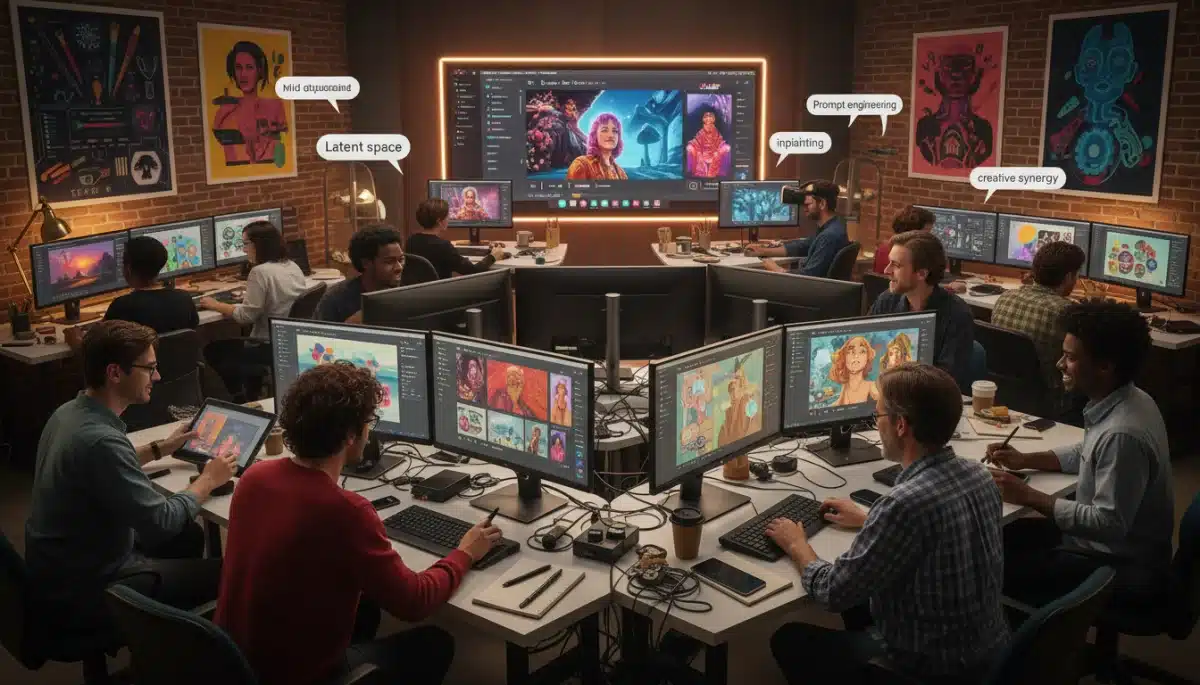
The rapid advancement of AI art has not been without its share of challenges and controversies, particularly within the US digital creator landscape. These issues often revolve around ethics, data sourcing, and the very definition of artistic originality.
Over the past three months, debates have intensified concerning the use of copyrighted material in AI training datasets and the implications for artists whose work may have been unknowingly used.
These discussions highlight the urgent need for clear guidelines and regulations.
Addressing these challenges is critical for fostering a sustainable and ethically sound future for AI art. The ongoing dialogue reflects a community grappling with the profound impact of this new technology.
Dataset Ethics and Copyright Infringement
One of the most contentious issues in AI art is the ethical sourcing of training data.
Many AI models are trained on vast datasets that include copyrighted images without explicit permission from the original creators, leading to accusations of infringement.
Lawsuits and public outcry from artists have brought this issue to the forefront, demanding greater transparency and accountability from AI developers.
The outcome of these legal battles will likely set precedents for the future of AI art development.
This controversy underscores the tension between technological innovation and the protection of intellectual property rights, a critical point in the current AI Art Trends Analysis.
The Debate on Artistic Authenticity
The rise of AI-generated art has sparked a philosophical debate about artistic authenticity and the role of human intent.
Critics argue that art created by algorithms lacks the genuine emotion and personal expression inherent in human-made works.
Conversely, proponents suggest that AI can be a powerful tool for human artists, enabling them to explore new ideas and push creative boundaries.
They argue that the human element of curation and direction remains central to the artistic process.
This ongoing discussion challenges traditional notions of art and authorship, prompting a re-evaluation of what constitutes a ‘true’ work of art in the digital age. It is a fundamental aspect of understanding AI Art Trends Analysis.
Future Projections for US Digital Creators
Looking ahead, the trajectory of AI art and its integration into the practices of US digital creators appears set for continued rapid evolution.
Projections for the coming months suggest further technological advancements, alongside ongoing adaptation and refinement from the artistic community.
Industry analysts anticipate new AI tools with even more sophisticated capabilities, potentially blurring the lines further between human and machine creativity.
This will necessitate continuous learning and strategic adaptation from creators to remain competitive and relevant.
The ongoing dialogue around ethics, intellectual property, and community collaboration will also play a crucial role in shaping the future landscape. These elements are central to any comprehensive AI Art Trends Analysis.
Anticipated Technological Innovations
The next few months are expected to bring significant innovations in AI art technology, including more intuitive interfaces, enhanced control over generated outputs, and better integration with existing creative software.
These advancements aim to make AI tools even more accessible and powerful.
We may also see the emergence of AI models specifically designed for niche artistic styles or mediums, allowing for greater specialisation. Such developments will likely open up new creative avenues for digital artists.
The pace of innovation means creators must stay abreast of the latest releases and updates to fully leverage the potential of AI in their work. This continuous learning is a hallmark of the current era.
Evolving Creator Skill Sets
As AI art tools become more sophisticated, the skill sets required for digital creators are also evolving.
Beyond traditional artistic abilities, proficiency in prompt engineering, AI model customisation, and ethical AI practices will become increasingly valuable.
Artists who can effectively direct and refine AI outputs will distinguish themselves. This shift emphasises critical thinking and problem-solving alongside traditional creative talents, changing the very definition of a ‘digital artist’.
The demand for hybrid skills, blending artistic vision with technical AI understanding, is projected to grow significantly. This evolution is central to the long-term AI Art Trends Analysis.
Regulatory Frameworks and Policy Debates
The rapid expansion of AI art has spurred significant discussions around the necessity for new regulatory frameworks and policies within the US.
Over the past three months, policymakers, legal experts, and creator advocacy groups have increasingly engaged in debates concerning intellectual property, fair use, and artist rights.
These discussions aim to establish clearer guidelines that can address the unique challenges posed by AI-generated content, particularly regarding ownership and compensation.
The goal is to strike a balance between fostering innovation and protecting creators.
The outcomes of these policy debates will have far-reaching implications for the entire digital art ecosystem. Understanding these potential shifts is crucial for anyone involved in AI Art Trends Analysis.
Legislative Actions and Proposals
Several legislative bodies in the US are beginning to explore potential actions to regulate AI art.
This includes proposals for mandatory disclosure of AI involvement in creative works and frameworks for addressing copyright disputes related to AI training data.
While comprehensive federal legislation has been enacted yet, the increasing attention from lawmakers signals a growing intent to address these issues.
State-level initiatives may also emerge as testing grounds for new policies.
- Mandatory AI disclosure: Requiring artists to state when AI has been used in their work.
- Copyright reform: Adapting existing copyright laws to encompass AI-generated content.
- Data sourcing regulations: Establishing rules for how AI models can be trained on existing art.
Advocacy from Creator Organisations
Digital creator organisations and artist unions are playing a pivotal role in advocating for policies that protect artists in the age of AI. They are actively lobbying for stronger intellectual property rights and fair compensation models.
These groups are also working to educate policymakers on the nuances of AI art, ensuring that any proposed regulations are informed by the realities of artistic practice. Their collective voice is crucial in shaping the future legal landscape.
The sustained advocacy from these organisations underscores the significant impact AI is having on the livelihoods and rights of artists. This collective action is a key component of ongoing AI Art Trends Analysis.
Societal and Cultural Impact of AI Art
Beyond the immediate creative and economic spheres, the proliferation of AI art is beginning to exert a broader societal and cultural impact in the United States.
Over the last three months, public perception and media representation of AI-generated content have evolved, leading to diverse reactions and discussions.
The accessibility of AI art has democratised creation to some extent, allowing individuals without traditional artistic training to produce visually compelling works.
This has led to a re-evaluation of artistic skill and the role of the artist in society.
Furthermore, AI art is influencing how we consume and interpret visual media, prompting questions about authenticity, originality, and the nature of human expression.
These cultural shifts are integral to understanding the full scope of AI Art Trends Analysis.
Public Reception and Ethical Debates
Public reception to AI art has been varied, with some embracing its innovative potential and others expressing concerns about its implications for human creativity.
Media coverage has often highlighted both the marvel and the controversy surrounding AI-generated images.
Ethical debates among the general public often mirror those within the creator community, touching upon issues of job displacement, the integrity of art forms, and the potential for misuse of AI technology.
These discussions are shaping broader societal attitudes.
- Democratisation of art: AI tools making art creation accessible to more people.
- Job displacement fears: Concerns about AI replacing human artists in commercial roles.
- Authenticity questions: Debates on whether AI art can truly be considered ‘art’.
AI Art in Popular Culture and Education
AI art is increasingly finding its way into popular culture, from album covers and movie posters to social media trends and viral challenges.
This mainstream exposure is normalising AI as a creative tool and familiarising the public with its aesthetic possibilities.
In educational settings, beyond specific art programmes, AI art is being used to teach concepts of digital literacy, ethics in technology, and the intersection of science and humanities.
It serves as a tangible example of advanced AI in action.
This integration into popular culture and education is fostering a broader understanding and acceptance of AI’s role in creative industries, while also prompting critical engagement with its societal implications.
This broad reach is a key aspect of AI Art Trends Analysis.
| Key Point | Brief Description |
|---|---|
| Creator Adaptation | US digital creators rapidly integrating AI tools into workflows, enhancing efficiency and exploring new styles. |
| Market Dynamics | AI art impacting digital art markets, creating new commercial models and raising intellectual property concerns. |
| Ethical Debates | Ongoing discussions on copyright, data sourcing, and artistic authenticity within the AI art community. |
| Future Outlook | Anticipated technological advancements and evolving creator skill sets will redefine digital art practices. |
Frequently Asked Questions About AI Art Trends
Over the past three months, the adoption rate among US digital creators has been remarkably swift. Many artists have moved from initial experimentation to integrating AI tools as a regular part of their creative process, driven by both curiosity and competitive necessity in the evolving digital landscape.
Key ethical concerns include the use of copyrighted material in AI training datasets without artist consent, the attribution of authorship for AI-generated works, and the potential for AI to devalue human artistic skill. These issues are currently central to ongoing debates and legal challenges.
AI art is creating new market segments, such as AI-assisted commissions and digital assets, while also introducing challenges like market saturation and intellectual property disputes. The value and authenticity of AI-generated art are actively being redefined within commercial spaces.
Beyond traditional artistic talents, digital creators now benefit from skills in prompt engineering, understanding AI model customisation, and navigating the ethical implications of AI. The ability to effectively direct and refine AI outputs is increasingly crucial for success.
Discussions are underway at various levels in the US, with proposals ranging from mandatory disclosure of AI involvement in artwork to reforms in copyright law. While comprehensive federal legislation is still pending, advocacy groups are pushing for policies that protect artist rights.
What This Means Now
The detailed AI Art Trends Analysis from the past three months underscores a pivotal moment for US digital creators.
The rapid integration of AI tools, coupled with evolving market dynamics and persistent ethical debates, signifies a profound shift in the creative landscape.
This disruption is particularly visible on social media, where viral generator apps have brought the tension between technical innovation and copyright directly to the mainstream.
While tech developers praise these systems as revolutionary collaborative tools, many working creatives worry about the permanent impact on creative labor, citing major concerns over non-consensual style scraping and intellectual property rights.
To explore these perspectives and learn more about how the creative community is pushing back, you can read the full report on viral AI-made art trends and artists’ concerns on NBC News.
Moving forward, creators, policymakers, and the public must engage in continuous dialogue to shape a future where innovation and artistic integrity coexist. The coming months will be crucial for establishing the norms and frameworks that will define AI’s role in art for years to come.
To see a real-world example of how these tensions are playing out in the traditional art market, you can watch Christie’s begin an AI art auction amid backlash.
This video is highly relevant because it shows how traditional, high-end galleries are commercializing AI-generated art, bringing the ethical and financial debates discussed above into the physical auction room.