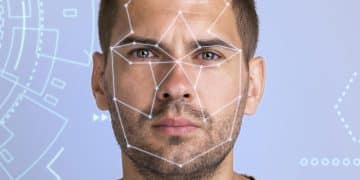
Deepfakes 2026: Identifying & Mitigating US Digital Trust Impact
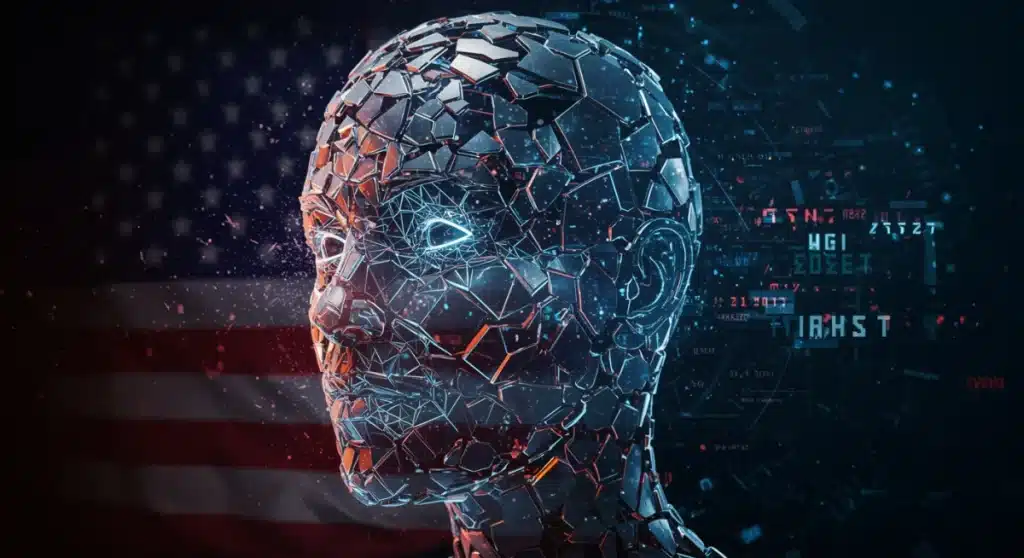
In early 2026, the digital landscape has reached a critical “verification crisis.”
As generative AI models become increasingly sophisticated, the ability to distinguish between authentic human interaction and synthetic media has become the primary challenge for global cybersecurity.
The threat is no longer limited to celebrity parodies; it has moved into high-stakes corporate espionage, automated social engineering, and identity spoofing in financial services.
In response, the industry is shifting from reactive “detection” to a “provenance-first” architecture.
The Escalating Threat of Deepfakes on US Digital Trust
The proliferation of deepfake technology presents an unprecedented challenge to the integrity of information and public confidence across the United States.
As 2026 unfolds, the sophistication of these AI-generated forgeries continues to advance rapidly, making detection increasingly difficult for the average user.
This evolving landscape demands a comprehensive understanding of how deepfakes are created, their diverse applications, and the profound implications they carry for national security, economic stability, and the very fabric of democratic processes.
Experts now warn that the capacity for widespread disinformation campaigns, identity theft, and reputational damage has reached critical levels, necessitating urgent and coordinated responses from government, industry, and civil society.
Defining Deepfakes: Beyond the Hype
Deepfakes are synthetic media in which a person in an existing image or video is replaced with someone else’s likeness using artificial intelligence.
This technology leverages deep learning algorithms, specifically generative adversarial networks (GANs), to create highly realistic and often convincing fakes.
Initially emerging as a novelty, deepfakes have rapidly evolved from innocuous entertainment to a powerful tool for malicious actors.
The underlying AI models learn patterns from vast datasets of real images and videos, enabling them to generate new content that mimics human speech, facial expressions, and mannerisms with alarming accuracy.
The core of deepfake technology lies in its ability to manipulate visual and auditory data seamlessly, blurring the lines between reality and fabrication. This technical prowess is precisely what makes deepfakes a formidable threat to digital trust.
How Deepfake Technology Works
Deepfake creation typically involves two neural networks: a generator and a discriminator. The generator creates fake content, while the discriminator attempts to distinguish between real and fake inputs.
Through this adversarial process, the generator continually refines its output, aiming to fool the discriminator, resulting in increasingly lifelike synthetic media.
The quality of the final deepfake heavily depends on the volume and diversity of the training data available.
- Generative Adversarial Networks (GANs): The foundational AI architecture enabling realistic deepfake creation.
- Autoencoders: Often used to encode and decode facial features, facilitating the swapping process.
- Voice Synthesis: AI models capable of replicating human voices from minimal audio samples.
Impact on US Digital Trust: A Multifaceted Crisis
The pervasive nature of deepfakes poses a significant threat to digital trust in the United States, eroding confidence in media, public figures, and institutions.
When verifiable truth becomes indistinguishable from sophisticated falsehoods, the foundational pillars of an informed society begin to crumble.
This erosion of trust extends beyond individual cases of deception, fostering an environment of pervasive skepticism where even genuine information is questioned.
The ability to manipulate public perception through deepfakes can destabilize political processes, incite social unrest, and undermine critical national dialogues.
The challenge lies not only in identifying individual deepfakes but in rebuilding and maintaining a collective sense of trust in digital information. This requires a concerted effort to enhance media literacy and develop robust verification mechanisms.
Electoral Integrity and Political Stability
Deepfakes can be weaponized during election cycles to spread false narratives, defame candidates, or manipulate voter sentiment.
A single, well-timed deepfake could potentially swing public opinion, influencing election outcomes and undermining democratic processes.
The ease with which these deceptive videos or audio clips can be disseminated across social media platforms amplifies their potential impact.
The rapid viral spread often outpaces efforts to debunk them, leaving lasting impressions on the electorate.
- Disinformation Campaigns: Creation of fabricated speeches or actions attributed to political figures.
- Voter Suppression: Spreading false information about voting procedures or candidate withdrawals.
- Geopolitical Interference: Foreign adversaries using deepfakes to sow discord and weaken national unity.
Practical Solutions for Identification and Mitigation
Addressing the deepfake challenge requires a multi-pronged approach encompassing technological advancements, educational initiatives, and legislative frameworks.
No single solution will suffice; instead, a layered defense strategy is essential to protect US digital trust.
Technological solutions focus on developing more sophisticated detection tools that can keep pace with deepfake generation capabilities.
These tools often rely on AI themselves, learning to spot subtle inconsistencies that human eyes or ears might miss.
Beyond technology, fostering critical thinking and media literacy among the general public is paramount.
Empowering individuals to question, verify, and critically evaluate digital content forms a crucial line of defense against deepfake deception.
Technological Detection and Forensic Tools
The arms race between deepfake creators and detectors is ongoing, with AI-powered forensic tools emerging as key players.
These tools analyse various digital artefacts, such as unnatural blinking patterns, inconsistent lighting, or subtle audio distortions, to identify synthetic media.
Watermarking and cryptographic signatures are also being explored as proactive measures to authenticate genuine content at its source.
This would allow users to verify the origin and integrity of media, establishing a clear chain of trust.
Understanding Deepfakes: A 2026 Guide to Identifying and Mitigating Their Impact on US Digital Trust (PRACTICAL SOLUTIONS, RECENT UPDATES) relies on these technological advancements.
- AI-Powered Detectors: Algorithms designed to identify subtle anomalies indicative of deepfakes.
- Digital Watermarking: Embedding invisible data into media to prove authenticity.
- Blockchain Verification: Using distributed ledger technology to track and verify media provenance.
Education and Media Literacy Initiatives
Equipping citizens with the skills to critically assess digital content is a vital defense against deepfakes.
Educational programmes across schools, universities, and public forums can teach individuals how to spot common deepfake indicators and encourage healthy skepticism.
Promoting media literacy helps individuals understand the motivations behind disinformation campaigns and the techniques used to manipulate information. This proactive approach empowers citizens to become more resilient to deceptive content.
Public awareness campaigns, fact-checking initiatives, and partnerships with social media platforms are also crucial in disseminating best practices for identifying and reporting deepfakes.
This collective effort strengthens the overall resilience of US digital trust.
Recent Updates and Policy Development (2026)
As of 2026, the US government and various organizations have intensified efforts to counter the deepfake threat through a combination of policy, legislation, and industry collaboration.
These recent updates reflect a growing recognition of the urgency required to protect national interests and public trust.
Several states have enacted laws addressing the malicious use of deepfakes, particularly in electoral contexts and for non-consensual pornography.
Federal discussions are ongoing regarding comprehensive legislation that would establish clear legal liabilities for deepfake creation and dissemination, especially when intent to deceive or harm is present.
Industry leaders are also stepping up, with major tech companies investing in deepfake detection research and implementing stricter content moderation policies. These collaborative efforts are critical for a holistic response to the evolving challenges posed by deepfakes.
Legislative and Regulatory Frameworks
The legal landscape surrounding deepfakes is rapidly evolving, with lawmakers striving to balance freedom of speech with the need to prevent harm.
New legislation aims to provide legal recourse for victims of malicious deepfakes and penalize those who create or spread them with deceptive intent.
Discussions are also focusing on mandating transparency for AI-generated content, requiring clear disclosures when media has been synthetically altered.
This ‘deepfake labelling’ initiative seeks to inform viewers and reduce the potential for unwitting deception.
Understanding Deepfakes: A 2026 Guide to Identifying and Mitigating Their Impact on US Digital Trust (PRACTICAL SOLUTIONS, RECENT UPDATES) is at the forefront of these legislative debates.
- Federal Legislation: Proposals for national laws addressing deepfake creation and dissemination with malicious intent.
- State-Level Laws: Existing and emerging state statutes targeting deepfakes in elections and non-consensual imagery.
- Transparency Mandates: Calls for compulsory disclosure labels on all AI-generated or manipulated media.
Industry Collaboration and Platform Responsibility
Social media platforms and technology companies play a critical role in combating the spread of deepfakes. Their responsibility extends to developing robust detection systems, implementing clear content policies, and actively removing deceptive content.
Collaboration between industry, academia, and government agencies is fostering the development of shared databases of deepfake detection methods and best practices. This collective intelligence is crucial for staying ahead of malicious actors.
Platforms are also exploring partnerships with fact-checking organizations to expedite the identification and debunking of deepfake content, thereby limiting its viral spread and mitigating its potential harm to digital trust.
This collaborative approach is vital for effective deepfake digital trust protection.
The Future Landscape of Deepfakes and Digital Trust
Looking ahead, the battle against deepfakes will intensify, requiring continuous innovation and adaptation. As AI technology advances, so too will the sophistication of synthetic media, making the task of identification increasingly complex.
This ongoing challenge necessitates a proactive and adaptive strategy.
The future will likely see a greater integration of AI in both deepfake generation and detection, creating a dynamic and evolving technological arms race. Investing in cutting-edge research and development is paramount to staying one step ahead of malicious actors.
Ultimately, safeguarding US digital trust in the age of deepfakes will depend on a collective commitment to technological vigilance, robust policy frameworks, and an informed, critically-minded populace.
| Key Challenge | Mitigation Strategy |
|---|---|
| Rapid Deepfake Evolution | Continuous R&D in AI detection and forensic tools. |
| Erosion of Public Trust | Enhanced media literacy and critical thinking education. |
| Disinformation Campaigns | Stronger platform content moderation and fact-checking. |
| Legal & Ethical Gaps | Development of comprehensive legislative and regulatory frameworks. |
Frequently Asked Questions About Deepfakes and Digital Trust
In 2026, a deepfake is any synthetic media, typically video or audio, generated using advanced AI to manipulate a person’s likeness or voice, making it appear as if they said or did something they did not. The key characteristic is its high level of realism, often indistinguishable from genuine content without forensic analysis.
Deepfakes undermine US digital trust by creating widespread confusion and skepticism about the authenticity of online information. This erosion of trust can destabilize political processes, harm reputations, and facilitate sophisticated fraud, making it difficult for citizens to discern truth from falsehood in crucial contexts like elections and public discourse.
Individuals can look for inconsistencies such as unnatural blinking, distorted facial features, odd lighting, or unusual audio-visual synchronisation. Cross-referencing information with trusted sources, using deepfake detection tools, and maintaining a healthy skepticism towards sensational online content are also effective strategies.
As of 2026, several US states have introduced or passed legislation targeting the malicious use of deepfakes, particularly in electoral contexts or for non-consensual imagery. Federal efforts are also underway to establish comprehensive laws that address the creation and dissemination of deepfakes with deceptive or harmful intent, aiming to protect deepfake digital trust.
Technology is advancing rapidly, with AI-powered forensic tools becoming more sophisticated in detecting subtle deepfake artefacts. Researchers are also exploring digital watermarking and blockchain-based verification methods to authenticate genuine media. This continuous innovation is crucial for staying ahead of deepfake generation capabilities and protecting deepfake digital trust.
What Happens Now
The ongoing evolution of deepfakes demands continuous vigilance and adaptive strategies from all sectors.
In conclusion, as we navigate 2026, the focus remains on strengthening the technological defenses, enhancing public awareness, and refining policy frameworks to protect US digital trust.
The collaborative efforts between government, industry, and civil society will be paramount in mitigating the pervasive impact of synthetic media.
Continued monitoring of legislative developments and advancements in AI detection tools is essential for maintaining a resilient information ecosystem against deepfake digital trust threats.
To understand how leaders are staying ahead of these sophisticated attacks, you can read the latest report on Incode and preparing for deepfakes in 2026.