Alert: Why 62% of US Digital Discourse Has Shifted from Public Feeds to Gated Micro-Communities in 2026
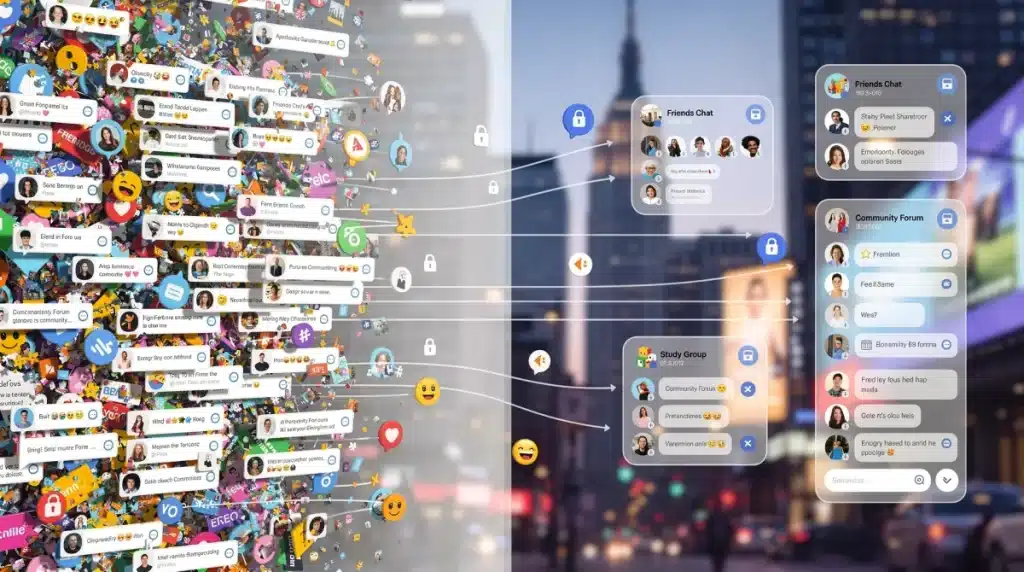
Noticed your social feeds feeling quieter while private group chats buzz nonstop? As US Digital Discourse Shifts rapidly away from open algorithms, 62% of American online conversation now takes place inside gated micro-communities.
Frustrated by AI-generated clutter, outrage bait, and public surveillance, millions of internet users are retreating to invite-only Discord servers, private Substacks, and encrypted group threads. Rather than broadcasting to open timelines, digital culture is reorganizing around smaller, trust-based circles.
Whether you manage brand outreach, track public sentiment, or simply navigate daily online spaces, this migration alters how ideas spread and communities form. Here is what is driving the exodus from public feeds and what the shift means for the modern internet.
The Unfolding Shift to Gated Digital Spaces
Recent reports indicate a dramatic acceleration in how Americans interact online, moving away from broad public forums. This shift is not merely a preference but a fundamental reorientation of digital social dynamics, driven by a confluence of factors.
The prevalence of curated, intimate digital environments is reshaping how individuals consume news, share opinions, and build social connections. Understanding the mechanics and motivations behind this transition is crucial for assessing its long-term societal impact.
As US Digital Discourse Shift intensifies, concerns about echo chambers and the fragmentation of public opinion are gaining prominence. This trend challenges traditional notions of a shared public sphere and demands careful consideration from policymakers and digital ethicists.
Driving Forces Behind the Migration
Several key factors are propelling users towards gated micro-communities, including a growing desire for privacy and protection from online harassment. Users are actively seeking environments where they can control their audience and engage in more meaningful exchanges.
The perceived decline in civility on public platforms, coupled with a saturation of advertising and algorithmic manipulation, also plays a significant role. Individuals are opting for spaces where discussions are more focused and less prone to hostile interactions.
Furthermore, the rise of niche interests and identity-based groups finds a natural home in these private spaces, fostering a sense of belonging and shared purpose. This allows for deeper dives into specific topics without the noise of general public feeds.
- Increased desire for privacy and data protection from large platforms.
- Escalating concerns over online harassment and misinformation on public feeds.
- The appeal of smaller, more intimate groups for focused, meaningful discussions.
Impact on Public Discourse and Information Flow
The move towards gated micro-communities fundamentally alters the landscape of public discourse in the US. Information now circulates within smaller, often ideologically aligned, networks rather than through broad, open channels.
This fragmentation can lead to a more nuanced understanding of specific issues within groups but also risks creating echo chambers that reinforce existing biases. The ability to reach a diverse audience with critical information becomes increasingly challenging.
Consequently, the traditional role of public social media as a barometer of societal sentiment is diminishing, replaced by a more opaque and segmented digital sphere. The implications for democratic processes and collective action are substantial given this US Digital Discourse Shift.
Challenges to Democratic Engagement
The shift poses significant challenges for democratic engagement, as shared public spaces for debate and consensus-building become scarcer. Political discourse, in particular, may become more polarised within insular groups.
Reaching diverse segments of the population with important civic information becomes harder when discussions are confined to private channels. This creates hurdles for public health campaigns, electoral outreach, and general civic education.
Moreover, the reduced visibility of dissenting opinions within these gated communities can stifle critical thinking and make it difficult for individuals to encounter alternative perspectives, impacting informed decision-making.
Privacy and Control: A New Digital Frontier
One of the primary motivators for the shift to gated micro-communities is the promise of enhanced privacy and greater control over personal data. Users are increasingly wary of how their information is collected and utilised on large public platforms.
These private spaces often offer more robust privacy settings and a clear understanding of who has access to shared content. This allows individuals to engage more freely without the constant scrutiny of a vast, anonymous audience.
The perception of security and autonomy within these communities is a powerful draw, as users seek refuge from data breaches and algorithmic surveillance. This prioritisation of privacy is a defining characteristic of the evolving US Digital Discourse Shift.
Empowering Users Through Gated Access
Gated access empowers users by giving them agency over their digital interactions and who they connect with. This contrasts sharply with the often-uncontrolled nature of public social media feeds.
Members can enforce community guidelines more effectively, fostering environments that are less prone to harassment and more conducive to constructive dialogue. This leads to a higher quality of interaction for many participants.
Ultimately, this control translates into a more personalized and comfortable online experience, where individuals feel safer expressing themselves without fear of widespread public backlash or unwanted attention.
- Users gain greater control over who sees their content and interactions.
- Enhanced privacy settings protect personal data from broader exposure.
- Smaller, curated groups often lead to higher quality, more civil discussions.
Economic and Business Implications for Digital Platforms
The ongoing US Digital Discourse Shift has significant economic and business implications for digital platforms. Companies reliant on advertising revenue from public feeds face declining engagement and user migration.
This necessitates a strategic pivot towards supporting or integrating with private community features, or developing new monetization models. Platforms must adapt to user demands for privacy and more intimate interactions.
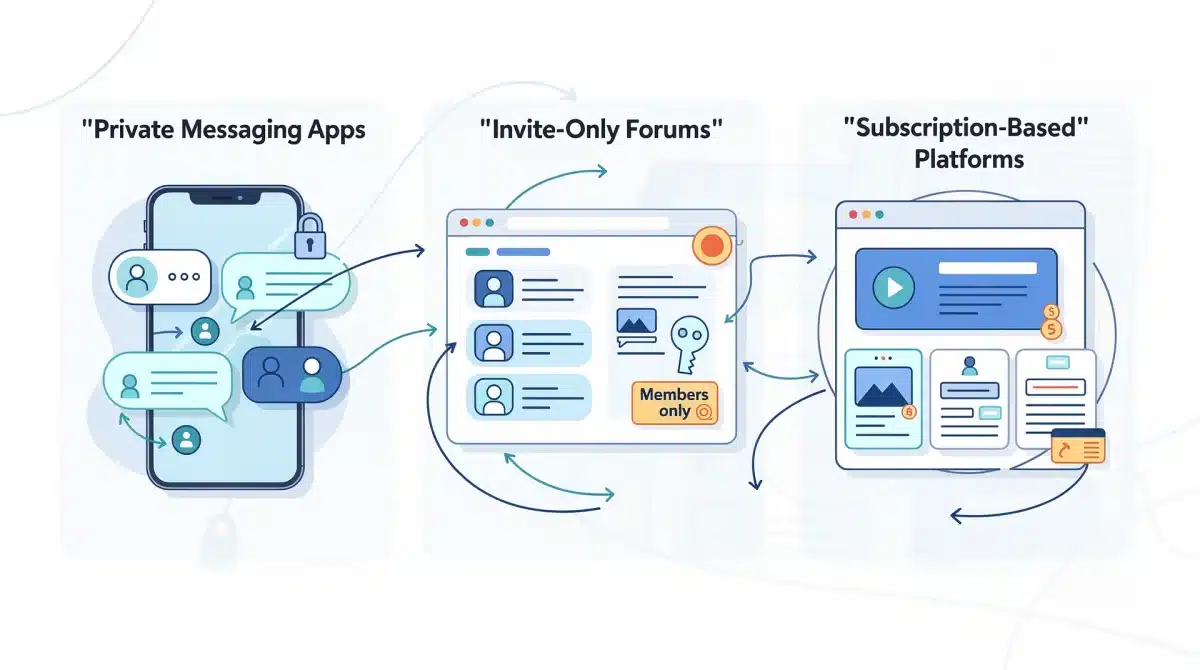
The rise of subscription-based models for exclusive content and community access is one emerging response, reflecting a willingness among users to pay for premium, private digital experiences. This changes the revenue landscape considerably.
New Monetization Strategies Emerge
Digital platforms are exploring innovative ways to monetise these private spaces, moving beyond traditional advertising. This includes premium features, direct content creator support, and exclusive access tiers.
The focus shifts from broad audience reach to deep engagement within specific, high-value communities. This requires a different approach to analytics and content delivery, tailored to smaller, more dedicated user bases.
Consequently, the digital economy is seeing a re-evaluation of value, where quality of interaction and exclusivity become as important as sheer volume of users. This redefines success metrics for many online businesses.
The Future of Online Identity and Community
As 62% of US digital discourse shifts to gated micro-communities, the very nature of online identity and community is being redefined. Individuals are cultivating more segmented and context-specific digital personas.
Instead of a single, public-facing identity, users now manage multiple identities tailored to different private groups, reflecting varied interests and social circles. This allows for greater authenticity within specific contexts.
The sense of belonging and shared purpose within these micro-communities often surpasses that found on large public platforms, fostering stronger bonds and more resilient digital social structures. This is a fundamental aspect of the US Digital Discourse Shift.
Reconceptualising Social Bonds Online
The emphasis on smaller, private groups is leading to a reconceptualisation of social bonds formed online. Relationships cultivated in these spaces tend to be deeper and more trusting, akin to real-world friendships.
This contrasts with the often-superficial connections on public feeds, where interactions can be fleeting and less personal. The intimacy of gated communities allows for more vulnerability and genuine exchange.
The long-term implications for social capital and mental well-being are significant, suggesting a potential return to more meaningful human connection in the digital realm, even if it is behind a digital ‘gate’.
Navigating Misinformation in Gated Spaces
While often seen as a refuge from public feed chaos, gated micro-communities are not immune to misinformation. The challenge shifts from broad dissemination to concentrated, harder-to-detect spread within trusted circles.
Information shared within these closed groups often carries an implicit stamp of approval from fellow members, making it potentially more persuasive. This can make critical evaluation difficult for participants.
Addressing misinformation in these environments requires different strategies, focusing on community-led moderation and critical media literacy among members, given the privacy inherent in the US Digital Discourse Shift.

Challenges for Content Moderation
Content moderation in gated micro-communities presents unique challenges compared to public platforms. The private nature of these groups makes external oversight difficult, relying heavily on internal mechanisms.
Platforms must empower group administrators with effective tools and clear guidelines, while respecting user privacy. This balance is crucial to prevent these spaces from becoming havens for harmful content.
The responsibility for maintaining a healthy information environment increasingly falls on community leaders and members themselves, requiring a proactive approach to identifying and addressing problematic content. The US Digital Discourse Shift demands new moderation paradigms.
Regulatory Considerations and Policy Responses
The significant US Digital Discourse Shift to gated micro-communities raises important regulatory considerations for governments and policymakers. Existing regulations often focus on broad public platforms, which may not apply effectively to private digital spaces.
Questions arise concerning data privacy, freedom of speech within closed groups, and the potential for these communities to be exploited for illicit activities. A nuanced approach is required that respects privacy while addressing societal risks.
Policymakers must consider how to protect users and ensure accountability without infringing on the autonomy that makes these communities appealing. This requires new legislative frameworks adapted to the evolving digital landscape.
Crafting Policies for Private Digital Interaction
Developing effective policies for private digital interaction is a complex task, demanding collaboration between governments, technology companies, and civil society. The aim is to foster safe and healthy online environments.
Key areas for consideration include data portability, interoperability between platforms, and clear guidelines for content moderation within private groups. Transparency regarding platform practices is also vital.
Ultimately, any policy response must balance the rights of individuals to privacy and association with the broader public interest in preventing harm and ensuring a robust, informed digital sphere. The US Digital Discourse Shift requires careful navigation.
| Key Point | Brief Description |
|---|---|
| Shift Magnitude | 62% of US digital discourse now in gated micro-communities. |
| Primary Drivers | Privacy, control, and desire for focused, civil interactions. |
| Societal Impact | Affects public discourse, democratic engagement, and information flow. |
| Future Outlook | Redefines online identity, community, and platform business models. |
Frequently Asked Questions About the Digital Discourse Shift
The shift means free speech increasingly occurs within private, curated spaces rather than broad public forums. While this can foster more open discussion among trusted members, it also raises concerns about reduced visibility for diverse viewpoints and the potential for echo chambers, impacting the broader public discourse.
Mainstream media’s reach is significantly impacted as news and information often circulate within these closed networks, bypassing traditional public feeds. This necessitates new strategies for journalists and news organisations to engage with audiences in these private spaces, adapting to the evolving US Digital Discourse Shift.
Generally, yes. Gated micro-communities offer users greater control over who sees their content and interactions, often with stronger privacy settings than large public platforms. However, privacy levels can vary by platform and user settings, and vigilance remains crucial for any online interaction within the US Digital Discourse Shift.
Potential downsides include increased information silos, making it harder to bridge ideological divides and foster common ground. It can also complicate efforts to combat misinformation, as false narratives can solidify within trusted groups. The fragmentation of public opinion is a significant concern for the US Digital Discourse Shift.
Individuals can adapt by consciously seeking diverse information sources beyond their immediate micro-communities and critically evaluating information shared within private groups. Engaging in a variety of online and offline communities can help maintain a balanced perspective in light of the ongoing US Digital Discourse Shift.
Looking Ahead: Implications and Adaptations
The profound US Digital Discourse Shift to gated micro-communities by 2026 is not merely a passing trend but a fundamental recalibration of online social interaction. This transformation necessitates ongoing adaptation from individuals, platforms, and policymakers alike.
Understanding the balance between privacy and public transparency will be crucial as this trend evolves.
The implications for democracy, information veracity, and social cohesion demand continuous monitoring and thoughtful policy development to navigate the complexities of this new digital reality.
Future developments will likely focus on interoperability between private platforms, refined moderation techniques, and innovative ways to foster cross-community dialogue. The digital landscape will continue to evolve, with the US Digital Discourse Shift serving as a key indicator of its direction.