Interactive Storytelling: 4 Innovative Formats US Publishers Adopt in 2026
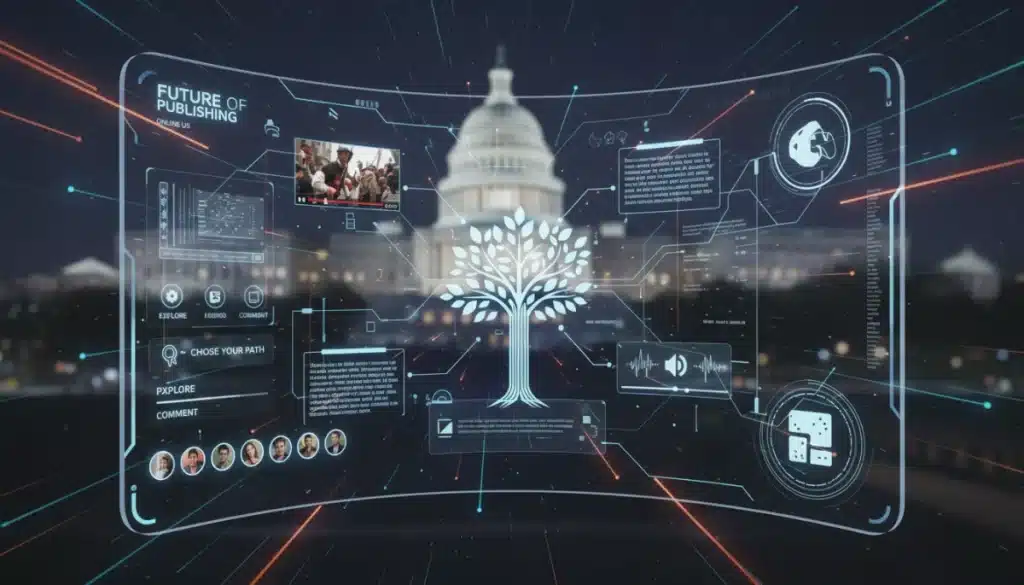
In 2026, digital publishing has moved past static text and layout boxes.
The current landscape is dominated by a shift toward “Generative and Non-Linear Media,” where US publishers are treating articles as interactive landscapes rather than fixed documents.
Spurred by scroll-activated animations and choose-your-own-perspective reporting, this guide analyzes the four innovative formats redefining reader engagement and content consumption in the digital age.
The Rise of Immersive Experiences in Digital Journalism
The demand for more engaging content has propelled US online publishers to explore immersive experiences within their digital narratives.
These formats aim to draw readers directly into the story, allowing them to explore, interact, and often influence the narrative’s progression.
This represents a significant departure from passive consumption, fostering a deeper connection with the journalistic content.
The adoption of these technologies is not merely a trend but a strategic imperative for publishers seeking to retain attention in a crowded media environment.
By offering unique interactive elements, they differentiate their content and provide added value to their readership.
This includes leveraging virtual reality, augmented reality, and other cutting-edge tools to build compelling narratives.
In 2026, the focus is squarely on formats that empower the reader, transforming them from spectators into active participants.
This shift necessitates new skill sets for journalists and technologists alike, as the lines between reporting, design, and development continue to blur.
The goal is to create memorable and impactful journalistic experiences through these innovative interactive storytelling formats.
Branching Narratives: Empowering Reader Choice
Branching narratives, a cornerstone of game design, are now finding their footing in online journalism, offering readers the power to shape their own informational journey.
This format presents readers with choices at various points, leading them down different narrative paths based on their decisions. The result is a highly personalised and engaging experience that caters to individual curiosity.
Publishers are utilising branching narratives to explain complex issues from multiple perspectives, allowing readers to delve into specific aspects that resonate most with them.
This approach effectively addresses the diverse interests of an audience, ensuring that each reader extracts the most relevant information. It also encourages repeat engagement, as users can explore alternative paths.
The implementation of branching narratives requires careful planning and robust content architecture to ensure logical flow and comprehensive coverage of the subject matter.
This innovative approach to Interactive Storytelling. is proving particularly effective for investigative journalism and educational content, where different angles and depths of information can be explored dynamically.
Personalised Information Paths
Readers are no longer passive recipients; they actively curate their news experience through branching narratives. This customisation allows for a more efficient and relevant information intake, reducing information overload.
The ability to pick and choose narrative segments ensures that users engage with content that directly addresses their specific questions or interests.
This level of control enhances comprehension and retention, making the journalistic piece more impactful.
This format is especially powerful for explaining multi-faceted topics, as it breaks down complex information into digestible, user-driven segments.
Publishers gain insights into reader engagement patterns, informing future content strategies.
Challenges in Implementation
- Developing comprehensive content for all possible branches and outcomes.
- Designing intuitive user interfaces that clearly present choices without overwhelming the reader.
- Ensuring editorial integrity and factual accuracy across all potential narrative paths.
- Managing the technical complexity of tracking user choices and delivering appropriate content.
Augmented Reality (AR) Overlays: Bringing Stories to Life
Augmented Reality (AR) overlays are transforming how digital stories are experienced, blurring the lines between the digital and physical worlds.
US online publishers are leveraging AR to superimpose digital information, 3D models, and interactive elements onto real-world environments viewed through a smartphone or tablet camera.
This technology adds a new dimension to visual storytelling, making abstract concepts tangible and events more immediate.
Imagine reading an article about urban development and, by pointing your phone at a city skyline, seeing a 3D model of the proposed new building appear in its intended location.
Or, when covering a historical event, seeing AR recreations of scenes unfolding in your living room.
Such applications provide context and depth that traditional media cannot replicate, significantly enhancing the user’s understanding and engagement with the journalistic content.
In 2026, AR overlays are moving beyond novelty, becoming an integral part of how publishers deliver complex data, historical context, and visualisations.
This innovative format for Interactive Storytelling.
is particularly effective for real estate reporting, scientific explanations, and cultural heritage pieces, offering an unparalleled level of immersion and interaction.

Data-Driven Interactives: Making Information Actionable
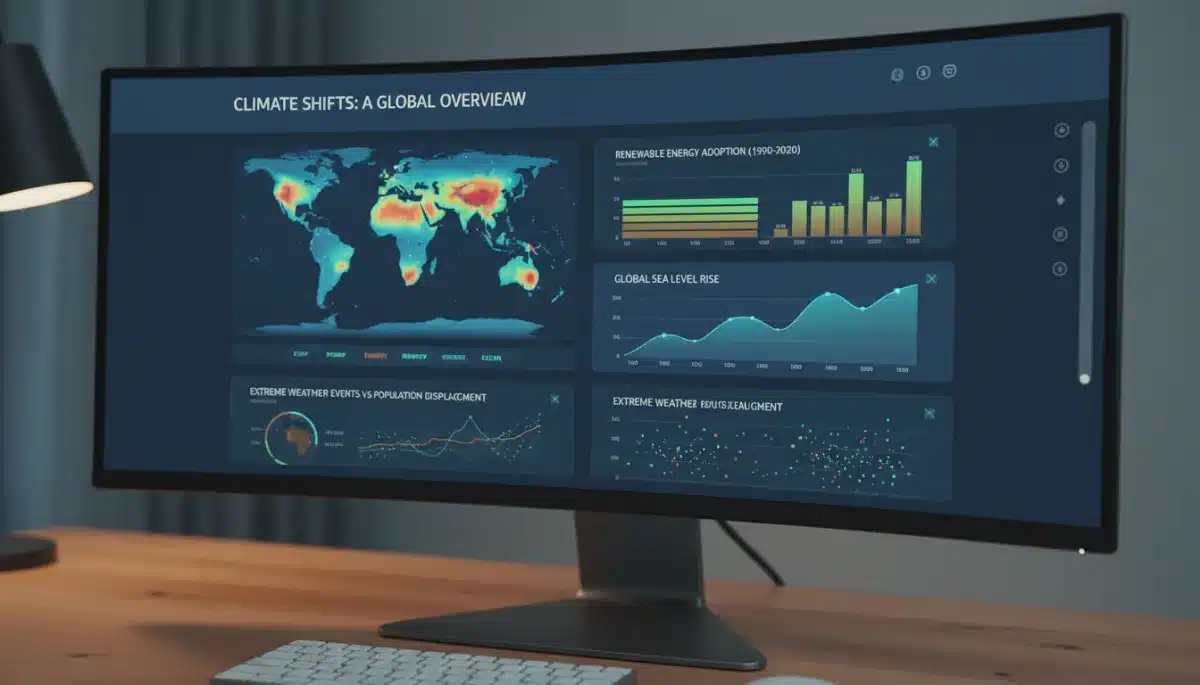
Data-driven interactives are revolutionising the way complex information is presented and understood by the public.
US online publishers are increasingly employing these tools to transform raw data into visually compelling and easily digestible interactive graphics, maps, and dashboards.
This approach allows readers to explore datasets at their own pace, filter information, and draw their own conclusions, fostering a deeper understanding of the subject matter.
This format moves beyond static charts and graphs, empowering users to manipulate variables, compare different data points, and uncover patterns that might otherwise remain hidden.
For instance, an interactive map showing demographic shifts allows users to zoom in on specific regions, filter by income levels, or compare changes over different decades.
This level of engagement turns data consumption into an active discovery process.
The power of data-driven interactives lies in their ability to make abstract statistics concrete and relevant to individual readers.
They are particularly effective for reporting on economics, public health, environmental issues, and elections, where large datasets often underpin critical stories.
This represents a significant advancement in Interactive Storytelling, making journalism more transparent and accessible.
Visualising Complex Information
Data-driven interactives convert dry statistics into compelling visual narratives. This visual approach significantly improves comprehension and retention for a broad audience, making complex topics accessible.
By allowing readers to interact directly with the data, publishers empower them to explore specific areas of interest. This personalisation ensures that the information presented is directly relevant to the user’s queries, enhancing engagement.
This format fosters a greater sense of transparency and trust, as readers can verify claims by exploring the underlying data themselves.
It represents a powerful tool for investigative journalism and public accountability, driving informed discourse.
Impact on User Engagement
- Increased time spent on pages featuring interactive data visualisations.
- Higher rates of information retention compared to traditional static reports.
- Improved understanding of complex issues due to personalised data exploration.
- Enhanced sharing potential as users discover and highlight unique insights.
Personalised News Feeds with AI: Tailoring the Narrative
The concept of personalised news feeds is not new, but in 2026, US online publishers are pushing the boundaries using advanced AI to tailor narrative delivery with unprecedented precision.
This goes beyond simple topic-based recommendations, employing sophisticated algorithms to understand individual reading habits, preferences, and even emotional responses to content.
The goal is to create a dynamic news experience that feels uniquely crafted for every user.
AI-driven personalisation allows publishers to present stories in formats and depths that best suit each reader, potentially adjusting the complexity of language, the prominence of visual elements, or even suggesting related content that builds on prior knowledge.
For example, a reader interested in tech might receive more in-depth analyses, while another focused on local news might see more community-oriented stories highlighted, all within a coherent narrative flow.
This format addresses the challenge of information overload by curating a highly relevant and engaging news experience, ensuring that readers receive content that matters most to them.
This advanced approach to Interactive Storytelling. is reshaping content distribution and consumption, making news more efficient and impactful for the individual.
Gamified Journalism: Engaging Through Play
Gamified journalism is emerging as a powerful strategy for US online publishers to engage audiences, particularly younger demographics, with complex or otherwise dry topics.
This innovative format integrates game-like elements such as points, levels, challenges, and rewards into journalistic content, transforming news consumption into an interactive and often competitive experience.
The aim is to make learning and understanding more enjoyable and memorable.
Publishers are using gamification to explain intricate political processes, economic principles, or scientific discoveries by challenging readers to make decisions, solve puzzles, or achieve specific objectives related to the story.
For instance, a game might simulate the challenges of running a small business, illustrating economic policies in a practical, engaging way. This hands-on approach fosters a deeper understanding than passive reading.
In 2026, gamified journalism is proving effective not only for education but also for encouraging civic engagement and critical thinking.
By making news interactive and rewarding, publishers can increase retention and encourage readers to delve deeper into important issues. This represents a playful yet potent form of Interactive Storytelling, bridging the gap between entertainment and information.
Interactive Challenges and Rewards
Gamified journalism transforms passive reading into an active challenge, motivating users to engage more deeply with content.
The introduction of points, badges, and leaderboards provides a sense of achievement and encourages continued interaction.
By presenting information as a series of solvable problems, complex topics become more approachable and less intimidating.
This method is particularly effective for explaining intricate policy details or scientific concepts, making them memorable.
The competitive aspect, where users can compare their understanding or progress with peers, adds an extra layer of engagement.
This fosters a community around news consumption, driving discussion and further exploration of the interactive storytelling formats.
Educational Impact
- Improved retention of factual information due to active learning and problem-solving.
- Increased motivation to explore complex topics that might otherwise be overlooked.
- Development of critical thinking skills through decision-making within narrative challenges.
- Enhanced ability to connect abstract concepts to real-world implications via interactive scenarios.
The Future Landscape of Digital Narratives
The adoption of these innovative formats signals a significant shift in the strategic direction of US online publishers.
The emphasis is moving from simply delivering information to crafting experiences that are deeply engaging, personalised, and memorable.
This evolution is driven by both technological advancements and changing audience expectations, particularly among younger demographics who grew up with interactive digital media.
As these technologies mature, we can expect to see even more sophisticated integrations, potentially combining elements of all four formats into single, multifaceted journalistic pieces.
Imagine a branching narrative that incorporates AR elements and data-driven interactives, all tailored by AI to your personal preferences. Such convergence promises an unparalleled level of immersion and understanding for the reader.
The investment in these sophisticated tools and techniques reflects a commitment by publishers to secure their relevance in an increasingly fragmented media landscape.
By pioneering these new forms of Interactive Storytelling, they are not only enhancing the reader experience but also redefining the very nature of online journalism for years to come.
Challenges and Opportunities for Publishers
While the benefits of interactive storytelling are clear, US online publishers face significant challenges in adopting these innovative formats.
The technical expertise required for development, the financial investment in new tools, and the need for new editorial workflows are considerable hurdles.
Training journalists to think interactively and collaborating with developers are crucial steps.
However, these challenges also present immense opportunities.
Publishers who successfully integrate these formats can establish themselves as leaders in digital innovation, attracting new audiences and retaining existing ones with superior content experiences.
The ability to measure engagement more precisely also provides valuable data for refining content strategies and business models.
Ultimately, the move towards these advanced forms of Interactive Storytelling: 4 Innovative Formats US Online Publishers are Adopting in 2026. is not just about technology; it is about reimagining the role of journalism in society.
By making news more accessible, engaging, and relevant, publishers can strengthen their connection with the public and foster a more informed citizenry, ensuring the vitality of their mission in the digital age.
| Key Format | Brief Description |
|---|---|
| Branching Narratives | Readers choose their path through a story, personalising the information flow. |
| Augmented Reality Overlays | Digital content superimposed onto real-world views, adding immersive context. |
| Data-Driven Interactives | Transforms complex data into engaging, explorable visualisations for deeper understanding. |
| Gamified Journalism | Integrates game elements to make news consumption interactive, educational, and fun. |
Frequently Asked Questions About Interactive Storytelling
Interactive storytelling significantly boosts reader engagement and retention by transforming passive consumption into an active experience. It fosters deeper understanding of complex topics and offers unique differentiation in a competitive digital landscape. Publishers also gain valuable insights into user preferences and behaviours, which can inform future content strategies and monetisation efforts effectively.
Branching narratives empower readers to choose their own informational path, making the news experience highly personalised. This customisation allows individuals to focus on aspects most relevant to their interests, improving comprehension and reducing information overload. It also encourages repeat visits as users explore different story angles, deepening their engagement with the content.
Augmented Reality (AR) overlays bring digital stories to life by superimposing interactive elements onto real-world views. This technology provides immersive context, making abstract concepts tangible and enhancing visual storytelling. AR is particularly effective for real estate, scientific explanations, and historical reporting, offering an unparalleled level of engagement and understanding for the audience.
Data-driven interactives transform complex datasets into accessible, visually engaging tools, allowing readers to explore information independently. This fosters a deeper understanding of topics like economics or public health by enabling users to filter and analyse data. They enhance transparency and build trust, as readers can verify information and draw their own conclusions from the raw data.
Gamified journalism integrates game-like elements such as points and challenges into news content, making learning and understanding more enjoyable. This approach transforms passive consumption into an active, often competitive, experience. It is particularly effective for explaining complex topics to younger audiences, increasing information retention and encouraging deeper exploration of critical issues through play.
Looking Ahead: The Evolution of Digital Storytelling
The embrace of these innovative Interactive Storytelling: 4 Innovative Formats US Online Publishers are Adopting in 2026 marks a pivotal moment for digital journalism.
It underscores a commitment to adapting to evolving reader expectations and leveraging technology to create more profound connections.
The ongoing development and integration of these formats promise a future where news consumption is not just informative but also deeply immersive and personally resonant.
Publishers who master these techniques will undoubtedly lead the charge in defining the next generation of online content, ensuring journalism remains vibrant and relevant in an ever-changing digital world.
By blending rigid editorial standards with fluid, interactive design, modern media is successfully transforming passive consumers into active explorers.
For a look at how this methodology translates into creative visual mediums, you can explore Builtvisible’s curation of online graphic novels, showcasing exceptional use cases of web-based sequential art.