Protecting Your Digital Identity: Top 7 Security Measures for US Citizens in 2026
As digital threats grow more sophisticated, Protecting Your Digital Identity: Top 7 Security Measures for US Citizens in 2026 delivers the latest updates and practical strategies to safeguard your personal data.
Sourced from recent industry and official reports, this guide provides a straightforward breakdown of what has changed, why it matters, and the critical security trends US citizens need to monitor next.
Understanding the Evolving Threat Landscape in 2026
The landscape of cyber threats continues to evolve at an unprecedented pace, presenting significant challenges for digital identity security US citizens.
As technology advances, so do the sophistication and frequency of attacks aimed at compromising personal data and online accounts.
In 2026, individuals face a complex array of risks, from phishing scams and malware to more advanced social engineering tactics.
Understanding these threats is the crucial first step in building effective defences and ensuring robust digital identity security US.
Recent reports from cybersecurity agencies highlight a surge in identity theft cases, often stemming from data breaches and compromised credentials. This underscores the urgent need for proactive measures in protecting your digital identity.
The Imperative for Strong Authentication Protocols
Robust authentication remains the cornerstone of effective digital identity security US.
Traditional password-only approaches are increasingly vulnerable to brute-force attacks and credential stuffing, necessitating stronger, multi-layered defences.
In 2026, the adoption of multi-factor authentication (MFA) is no longer an option but a critical requirement for every online account.
This adds an essential layer of security beyond just a password, significantly hindering unauthorised access attempts.
Government agencies and industry leaders are actively promoting the widespread implementation of MFA across all digital services. Implementing MFA is a practical and highly effective step for protecting your digital identity.
Implementing Multi-Factor Authentication (MFA)
MFA requires users to provide two or more verification factors to gain access to an account.
These factors typically fall into three categories: something you know (password), something you have (phone, security key), or something you are (fingerprint, facial recognition).
The most common forms of MFA include SMS codes, authenticator apps like Google Authenticator or Authy, and physical security keys such as YubiKey. Each method offers varying degrees of security and convenience.
- Enable MFA on all critical accounts, including email, banking, social media, and cloud services.
- Prioritise authenticator apps or hardware security keys over SMS-based MFA, as SMS can be vulnerable to SIM-swapping attacks.
- Regularly review and update your MFA settings to ensure they are configured optimally for digital identity security US.
The Rise of Passwordless Authentication
Looking ahead, passwordless authentication methods are gaining traction as a more secure and user-friendly alternative.
These technologies aim to eliminate the need for traditional passwords altogether, reducing the risk of credential-based attacks.
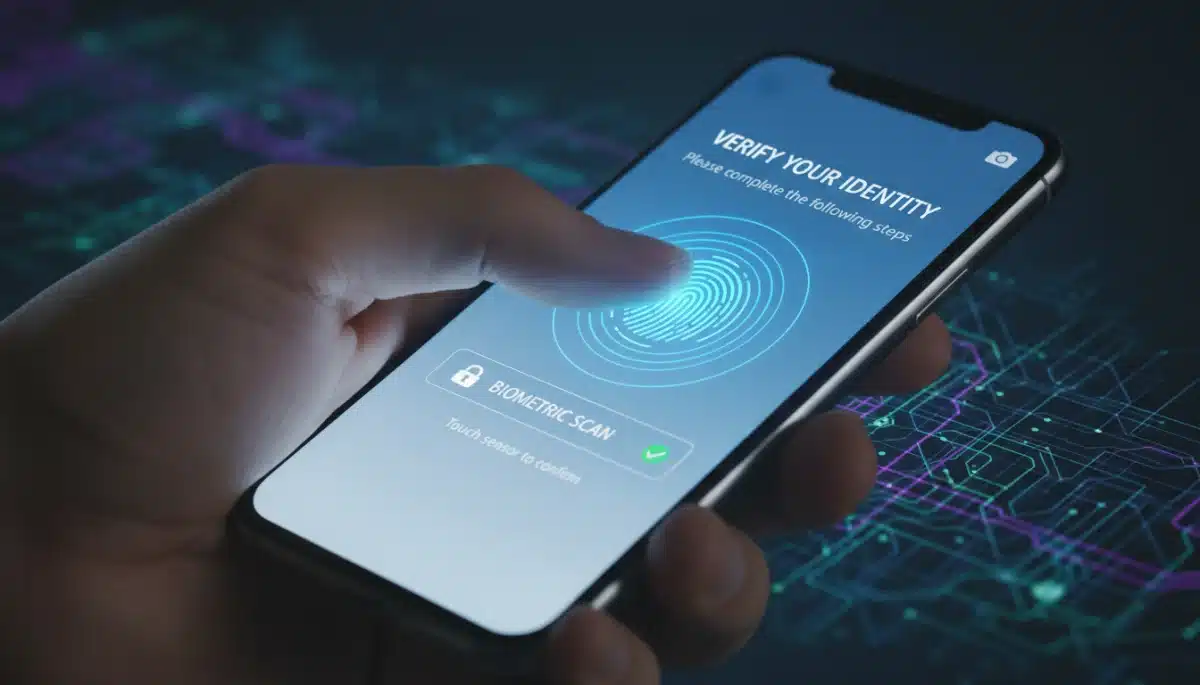
Biometric authentication, such as fingerprint and facial recognition, combined with FIDO Alliance standards, represents a significant leap forward. These methods offer a seamless yet highly secure login experience.
- Explore services that offer FIDO-compliant passwordless options, using your device’s built-in biometrics.
- Stay informed about new developments in passwordless technology and consider adopting them as they become more widely available and secure.
- Understand the underlying security mechanisms of passwordless systems to ensure they meet your digital identity security US needs.
Securing Your Devices and Networks
The devices we use daily are primary entry points for cyber attackers seeking to compromise digital identity security US. Laptops, smartphones, and tablets must be protected with the same vigilance as online accounts.
Keeping operating systems and applications updated is fundamental to patching known vulnerabilities that attackers frequently exploit. Ignoring these updates leaves critical security gaps open for exploitation.
Furthermore, the networks through which we access the internet also pose significant risks, especially public Wi-Fi. Ensuring secure connections is paramount for protecting your digital identity.
Regular Software Updates and Patch Management
Software vulnerabilities are a constant target for cybercriminals. Developers regularly release patches and updates to address these flaws, and it is crucial to install them promptly.
Enabling automatic updates for your operating system, web browser, and all installed applications ensures you benefit from the latest security enhancements. Manual checks should also be performed periodically.
- Activate automatic updates on all devices and software platforms.
- Regularly check for and install manual updates for less frequently used applications.
- Understand the importance of these updates in preventing exploits that target digital identity security US.
Utilising Secure Network Connections (VPNs)
Public Wi-Fi networks, often found in cafes, airports, and hotels, are inherently insecure and can expose your data to eavesdropping. Cybercriminals can easily intercept information transmitted over these unencrypted networks.
A Virtual Private Network (VPN) encrypts your internet connection, creating a secure tunnel for your data. This makes it significantly harder for third parties to monitor your online activities or steal sensitive information.
- Always use a reputable VPN service when connecting to public Wi-Fi networks.
- Ensure your VPN client is up-to-date and configured correctly for optimal digital identity security US.
- Avoid free VPN services, as they often come with privacy trade-offs or may not offer adequate security.
Data Minimisation and Privacy Management
In an era of pervasive data collection, adopting a strategy of data minimisation is vital for protecting your digital identity. Sharing less personal information online inherently reduces your attack surface and the potential impact of data breaches.
Carefully managing your privacy settings across all online platforms is another critical component. Many services default to less private settings, which users must proactively adjust to their comfort level.
Understanding what data is being collected about you and how it is used empowers you to make informed decisions. This proactive approach is key for digital identity security US.
Practicing Data Minimisation
Before signing up for a new service or filling out a form, consider whether providing certain pieces of information is truly necessary. Only share what is absolutely required for the service to function.
Review existing accounts and delete any old profiles or data that are no longer needed. This reduces the amount of personal information floating around the internet, lowering your risk.
- Be selective about the information you share on social media and online forums.
- Utilise temporary or disposable email addresses for non-critical sign-ups to limit data exposure.
- Regularly audit your online presence to remove unnecessary personal data for protecting your digital identity.
Configuring Privacy Settings Effectively
Every major online service, from social media to email providers, offers extensive privacy settings. These controls allow you to dictate who can see your information, how your data is used, and what ads you receive.
Take the time to go through the privacy settings of all your online accounts and adjust them to your preferences. Default settings often favour data sharing over privacy.
- Regularly review and update your privacy settings on social media platforms, search engines, and other online services.
- Understand the implications of each setting on your digital footprint and digital identity security US.
- Utilise browser privacy extensions that block trackers and enhance your online anonymity.
Proactive Monitoring and Incident Response
Even with the best preventative measures, breaches and identity theft can still occur. Therefore, proactive monitoring of your digital identity and having a clear incident response plan are essential for US citizens in 2026.
Vigilance against suspicious activities, such as unusual login attempts or unexpected account changes, is paramount. Early detection can significantly mitigate the damage caused by an attack.
Knowing what steps to take immediately after a suspected compromise can mean the difference between a minor inconvenience and a major identity crisis. This forms a vital part of digital identity security US.
Credit Monitoring and Identity Theft Protection Services
Credit monitoring services alert you to suspicious activity on your credit reports, such as new accounts opened in your name or significant changes to your credit score. These services often include dark web monitoring for your personal information.
Identity theft protection services go a step further, offering assistance in recovering your identity if it is stolen. They can help with reporting fraud, contacting creditors, and navigating the complex restoration process.
- Subscribe to a reputable credit monitoring service to stay informed of financial activities tied to your identity.
- Consider an identity theft protection service for comprehensive support in case of a breach, enhancing digital identity security US.
- Regularly review your bank statements and credit card transactions for any unauthorised charges.
Developing a Personal Incident Response Plan
Having a pre-defined plan for what to do if your digital identity is compromised can save valuable time and reduce stress during a crisis. This plan should outline immediate actions to take.
This includes steps like changing passwords, notifying relevant institutions, and freezing credit. A clear, calm response can limit the spread of damage and aid recovery.
- Create a checklist of actions to take if you suspect a data breach or identity theft.
- Know how to contact your banks, credit card companies, and the major credit bureaus (Equifax, Experian, TransUnion) to report fraud.
- Keep a secure, offline record of important account numbers and contact information for digital identity security US.
Educating Yourself Against Social Engineering
Social engineering remains one of the most effective methods for cybercriminals to bypass technical security measures.
These attacks exploit human psychology, tricking individuals into revealing sensitive information or performing actions that compromise their digital identity security US.
Phishing, pretexting, and baiting are common social engineering tactics that continue to evolve in sophistication. Recognising the signs of these attacks is critical for effective self-defence.
Continuous education and awareness are therefore indispensable tools in the arsenal for protecting your digital identity. A well-informed user is the strongest line of defence against these manipulative schemes.
Recognising Phishing and Pretexting Attacks
Phishing attacks typically involve deceptive emails, messages, or websites designed to trick you into revealing login credentials, financial details, or other personal information. They often mimic legitimate organisations.
Pretexting involves creating a fabricated scenario to manipulate a victim into divulging information. The attacker often assumes a false identity, such as a bank representative or IT support.
- Be suspicious of unsolicited emails or messages asking for personal information or containing urgent requests.
- Verify the sender’s identity and the legitimacy of links before clicking them, especially for protecting your digital identity.
- Learn to identify common red flags, such as grammatical errors, unusual sender addresses, and suspicious attachments.
Leveraging Privacy-Enhancing Technologies
Beyond traditional security measures, a growing suite of privacy-enhancing technologies (PETs) offers additional layers of protection for your digital identity. These tools are designed to minimise data exposure and enhance anonymity online.
From secure browsers to encrypted communication apps, PETs empower users to take greater control over their personal data. Integrating these technologies into your daily routine can significantly bolster your overall digital identity security US.
As privacy concerns intensify, the adoption of PETs is becoming a standard practice for individuals serious about safeguarding their online presence. This proactive step helps in protecting your digital identity.
Utilising Secure Browsers and Search Engines
Mainstream browsers often collect extensive user data for advertising and analytics purposes. Opting for privacy-focused browsers can significantly reduce this data collection footprint.
Similarly, privacy-centric search engines do not track your search history or personal information, providing a more anonymous browsing experience. These alternatives are crucial for digital identity security US.
- Switch to privacy-focused browsers like Brave, Firefox Focus, or Tor Browser for enhanced anonymity.
- Use search engines such as DuckDuckGo or Startpage, which prioritise user privacy and do not track your searches.
- Regularly clear your browser’s cookies and cache to prevent persistent tracking and enhance protecting your digital identity.
Regular Review of Digital Footprint
Your digital footprint encompasses all the data you leave behind as you navigate the internet.
This includes everything from social media posts and online purchases to website visits and app usage. Regularly reviewing and managing this footprint is a critical aspect of digital identity security US.
An extensive and easily accessible digital footprint can make you a more attractive target for cybercriminals and identity thieves. Minimising this exposure is a proactive defence strategy.
Periodically auditing your online presence helps identify and remove outdated or sensitive information that could be exploited. This diligence reinforces the efforts in protecting your digital identity.
Auditing Your Social Media and Online Accounts
Social media platforms often contain a wealth of personal information that, if exposed, can be used for social engineering or identity theft. Regularly review your profiles for publicly visible data.
Consider what information you genuinely need to share and remove anything that is unnecessary or potentially risky. Adjusting privacy settings on these platforms is a continuous process.
- Conduct an annual audit of all your social media profiles, checking privacy settings and content visibility.
- Remove old posts, photos, or personal details that are no longer relevant or could compromise your digital identity security US.
- Be mindful of the information shared by others about you and request its removal if it poses a risk to protecting your digital identity.
| Key Measure | Brief Description |
|---|---|
| Multi-Factor Authentication | Essential layer for all online accounts, significantly reducing unauthorised access. |
| Software Updates | Regularly patch vulnerabilities on all devices and applications to prevent exploits. |
| VPN Usage | Encrypt internet connections, especially on public Wi-Fi, to protect data privacy. |
| Data Minimisation | Share only essential personal information online to reduce attack surface. |
Frequently Asked Questions About Digital Identity Security
Implementing Multi-Factor Authentication (MFA) on all critical online accounts is paramount. MFA adds a crucial layer of security that significantly deters unauthorised access, even if your password is compromised. It’s a foundational element for robust digital identity security US.
It is recommended to review your privacy settings on social media and other online services at least once every six months, or whenever a platform updates its policies. This ensures your settings align with your current privacy preferences for Protecting Your Digital Identity.
Generally, free VPNs are not recommended for robust digital identity security US. Many free services may log user data, inject ads, or have weaker encryption, compromising the very privacy they claim to offer. Investing in a reputable paid VPN is a safer choice for Protecting Your Digital Identity.
Immediately change all passwords, especially for email and banking accounts. Notify relevant financial institutions, freeze your credit with the major bureaus, and report the incident to the appropriate authorities. Act swiftly to mitigate further damage to your digital identity security US.
Cyber threats constantly evolve, making continuous education vital. Staying informed about new phishing techniques, malware, and social engineering tactics empowers you to recognise and avoid them. An informed user is the strongest defence against threats to digital identity security US.
What This Means Now
The imperative for Protecting Your Digital Identity: Top 7 Security Measures for US Citizens in 2026 (PRACTICAL SOLUTIONS, RECENT UPDATES) has never been greater.
The strategies outlined require consistent application and vigilance, moving beyond mere awareness to active implementation.
As cyber threats become more sophisticated, the responsibility falls on individuals to fortify their digital perimeters and ensure personal data remains secure.
To take a proactive step in monitoring your data exposure and securing your online presence, you can utilize dedicated resources like Bitdefender’s Digital Identity Protection Services.
Ultimately, the ongoing evolution of technology and threat actors means that these measures, while robust today, will require continuous adaptation and review to maintain effective digital identity security in the US.