The Unexpected Virality of ‘Slow Content’: A 2026 US Trend Report and Its Financial Impact
In a digital world obsessed with hyper-fast feeds and fleeting trends, the internet is finally slowing down. Embracing Slow Content Virality has emerged as the definitive shift of the year, proving that deep, meticulously crafted narratives can outperform chaotic, short-form algorithms.
This unexpected movement marks a massive departure from rapid-fire clickbait toward meaningful, high-retention media.
Audiences are actively choosing deep-dive essays, cinematic long-form videos, and deliberate storytelling, a behavioral pivot that is fundamentally rewriting corporate engagement strategies.
For creators and brands alike, this transition carries massive economic implications, transforming how digital assets are monetized over time. Dive into this trend report to discover why patience is becoming the ultimate revenue driver and how evergreen media is securing long-term financial success.
Understanding the ‘Slow Content’ Phenomenon
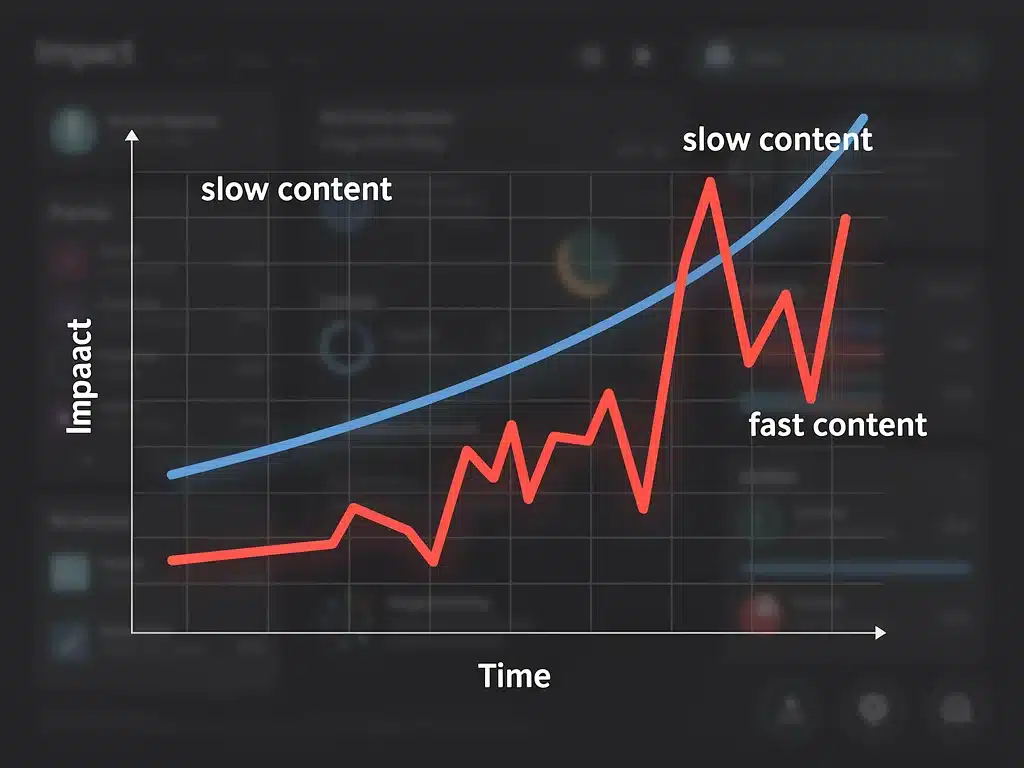
The concept of ‘slow content’ stands in stark contrast to the prevalent ‘fast content’ model characterised by short videos, quick reads, and constant updates.
It emphasises quality, depth, and lasting value over immediate, fleeting engagement, fostering a more meaningful connection with the audience.
This shift isn’t merely about content length; it’s about the entire consumption experience. Users are seeking substance, context, and a break from the relentless scroll, leading to a greater appreciation for thoughtfully produced material that encourages deeper reflection.
The 2026 US Trend Report underscores that this isn’t a temporary fad but a foundational change in audience behaviour. The unexpected virality of ‘slow content’ suggests a collective yearning for more enriching digital interactions, moving beyond superficial engagement.
The Rise of Deeper Engagement Metrics
Traditional metrics like likes and shares are being supplemented, and in some cases overshadowed, by indicators of true engagement, such as completion rates for long videos and time spent on page for extensive articles. These metrics provide a clearer picture of content effectiveness.
Platforms are beginning to adapt algorithms to favour content that demonstrates sustained user attention, recognising its intrinsic value. This algorithmic shift further fuels the growth of slow content virality, rewarding creators who prioritise depth.
The emphasis on deeper engagement aligns with a broader consumer desire for authenticity and value. As digital noise increases, well-researched, carefully presented content cuts through the clutter, proving its worth over time.
Audience Fatigue and Information Overload
Years of relentless, fast-paced content consumption have led to significant audience fatigue. Users are increasingly overwhelmed by the sheer volume of superficial information, seeking refuge in more substantial and less demanding formats.
The constant pressure to keep up with fleeting trends and an endless stream of updates contributes to digital burnout. ‘Slow content’ offers an antidote, providing a calmer, more reflective space for information absorption.
This fatigue is a critical driver behind the unexpected virality of ‘slow content’. It represents a natural pendulum swing as users consciously seek out experiences that offer more than just momentary distraction.
The 2026 US Trend Report: Key Findings
Digital Horizon’s 2026 report meticulously analyses data from millions of US consumers, revealing compelling patterns in content consumption and preference. The findings paint a clear picture of a market embracing depth and narrative over brevity.
The report highlights significant increases in average session duration on platforms hosting long-form content, alongside a measurable decline in bounce rates. These statistics are crucial indicators of sustained user interest and commitment.
Furthermore, the data indicates a growing willingness among consumers to pay for high-quality, in-depth content, signalling a shift in perceived value. This directly impacts the financial models supporting content creation, marking a new era for slow content virality.
Demographic Shifts and Content Preferences
While often associated with older demographics, the report indicates that younger audiences, particularly Gen Z and younger millennials, are also contributing to the slow content virality trend.
They value authenticity and unique perspectives, which often manifest in well-researched, longer formats.
This cross-generational appeal suggests that the demand for ‘slow content’ is not confined to a specific age group but reflects a broader cultural shift. Diverse audiences are finding common ground in their quest for meaningful digital experiences.
Understanding these demographic nuances is critical for brands and creators aiming to tap into this burgeoning market. Tailoring content to resonate with these varied preferences is key to harnessing the power of slow content virality.
Platform Adaptations and Algorithmic Changes
Major social media and content platforms are already responding to these evolving user behaviours. Several platforms have begun to adjust their algorithms to prioritise content that garners longer watch times and deeper engagement, indirectly boosting slow content virality.
New features supporting longer video formats, in-depth articles, and interactive storytelling are being rolled out. These changes reflect an industry-wide recognition of the shifting landscape and the growing influence of ‘slow content’.
The report forecasts further algorithmic refinements throughout 2026, which will likely solidify the position of ‘slow content’ as a dominant force in digital media. This ongoing evolution is essential for fostering the continued slow content virality.
The Financial Impact of Slow Content Virality
The financial implications of this trend are profound, affecting advertising models, subscription services, and creator monetisation strategies. Businesses are now re-evaluating their content investments to align with this new reality.
Brands that successfully pivot to ‘slow content’ are reporting higher return on investment (ROI) due to increased brand loyalty and more qualified lead generation. The deeper engagement translates into more effective marketing funnels.
This re-calibration of value is a direct consequence of the unexpected virality of ‘slow content’, demonstrating that quality can indeed drive profitability in the digital age. The financial landscape is clearly shifting.
Advertising Revenue and Brand Loyalty
For advertisers, ‘slow content’ environments offer a premium setting for brand messaging. Ads placed within high-quality, long-form content benefit from increased attention and a more engaged audience, leading to better recall and sentiment.
The report indicates a growing willingness among brands to invest in ‘slow content’ channels, moving away from purely impression-based models. This shift supports creators who can deliver sustained audience attention.
Furthermore, brands associated with thoughtful, in-depth content often see enhanced brand perception and loyalty. This strategic alignment leverages the inherent trustworthiness and value of slow content virality.
Subscription Models and Creator Economy
The rise of ‘slow content’ directly fuels the growth of subscription-based models. Audiences are increasingly willing to pay for exclusive access to high-quality, ad-free content that provides genuine value and insight.
This trend empowers independent creators and niche publishers, allowing them to build sustainable revenue streams based on the quality and depth of their work. The creator economy is experiencing a significant uplift from slow content virality.
Platforms offering tools for direct fan support, such as patronage and membership programmes, are seeing substantial growth. This democratisation of content funding is a key outcome of the financial impact of slow content virality.
Challenges and Opportunities for Content Creators
While the shift to ‘slow content’ presents numerous opportunities, it also introduces new challenges for creators accustomed to rapid production cycles. The demand for quality requires greater investment in research, production, and storytelling.
Creators must develop new skill sets, including in-depth investigative journalism, advanced video production, and nuanced narrative development. This elevates the bar for entry but also rewards genuine expertise and dedication.
The upside, however, is significant: ‘slow content’ often has a longer shelf life, enabling creators to build evergreen assets that continue to attract audiences and generate revenue over extended periods, reinforcing slow content virality.
Investing in Quality Production and Research
Producing ‘slow content’ demands a higher commitment to quality at every stage, from initial concept to final delivery. This includes thorough research, expert interviews, and sophisticated editorial processes.
Creators are increasingly collaborating with specialists, such as data journalists, documentary filmmakers, and subject matter experts, to enrich their content. This interdisciplinary approach enhances the depth and credibility of the material.
The investment in quality yields tangible returns, as audiences are more likely to share, discuss, and return to content that demonstrates meticulous craftsmanship. This reinforces the virtuous cycle of slow content virality.
Building Niche Audiences and Community
‘Slow content’ naturally fosters the development of dedicated, engaged niche communities. By providing in-depth information on specific topics, creators attract highly motivated audiences seeking specialised knowledge and discussion.
These communities are often more loyal and receptive to direct engagement, offering valuable feedback and contributing to content evolution. This deep connection is a hallmark of successful ‘slow content’ strategies.
The report indicates that strong community building around ‘slow content’ leads to more stable revenue streams and organic growth, proving that deep engagement with a smaller, dedicated audience can be more impactful than broad, superficial reach.
This is a testament to the power of slow content virality.

Future Outlook: Sustaining Slow Content Virality
The 2026 US Trend Report suggests that ‘slow content’ is not a temporary anomaly but a foundational shift in how digital content is created and consumed. Its virality is expected to grow as audiences continue to prioritise quality and depth.
Innovations in immersive storytelling, interactive documentaries, and personalised learning experiences are anticipated to further enhance the appeal of ‘slow content’. Technology will play a crucial role in delivering these richer experiences.
Businesses and creators who proactively adapt to this trend, investing in thoughtful and high-quality content, are poised for long-term success. The sustained slow content virality will reshape the digital media landscape for years to come.
Technological Advancements and Immersive Experiences
Emerging technologies like virtual reality (VR) and augmented reality (AR) are set to offer new avenues for ‘slow content’, enabling highly immersive and interactive storytelling experiences. These innovations will deepen user engagement even further.
Advanced AI tools are also being developed to assist creators with research, content structuring, and audience analysis, streamlining the production of high-quality, in-depth material. This supports the scalability of ‘slow content’.
These technological advancements will not only enhance the creation of ‘slow content’ but also improve its distribution and accessibility, ensuring its continued relevance and boosting slow content virality across new platforms.
Ethical Considerations and Content Responsibility
As ‘slow content’ gains prominence, there’s an increased emphasis on ethical content creation, including accuracy, transparency, and responsible sourcing. Audiences demand trustworthiness in their deeper dives into topics.
Creators and platforms are facing greater scrutiny regarding misinformation and bias, pushing for higher editorial standards. This aligns perfectly with the core tenets of ‘slow content’ – integrity and substance.
The report highlights that content with strong ethical foundations is more likely to achieve sustained slow content virality, as it builds profound trust with its audience. Responsibility becomes a key differentiator in a crowded digital space.
| Key Point | Brief Description |
|---|---|
| Shift to Depth | US audiences increasingly prefer in-depth, high-quality content over fast, ephemeral posts, driving slow content virality. |
| Financial Upside | ‘Slow content’ yields higher ROI, boosted brand loyalty, and growth in subscription models, impacting financial strategies. |
| Creator Evolution | Creators must invest in quality research and production, fostering niche communities for sustainable success in slow content. |
| Future Growth | Technological advancements and ethical focus will sustain and expand the virality of ‘slow content’ in the coming years. |
Frequently Asked Questions About Slow Content Virality
‘Slow content’ is characterised by its depth, quality, and lasting value, contrasting with fast, ephemeral content. It prioritises in-depth articles, long-form videos, and meticulous narratives that foster deeper audience engagement and reflection, as highlighted by the report on slow content virality.
Its virality stems from audience fatigue with information overload and a desire for meaningful engagement. Content algorithms are also adapting to favour deeper interaction metrics, rewarding quality and substance, thereby boosting slow content virality through organic shares and sustained attention.
The financial impacts include higher ROI for brands, increased brand loyalty, and a surge in subscription-based models. ‘Slow content’ provides premium advertising environments and empowers creators with sustainable revenue streams, altering the economic landscape for slow content virality.
Yes, the 2026 report indicates that younger audiences, including Gen Z and millennials, are increasingly contributing to the slow content virality trend. They value authenticity, unique perspectives, and in-depth exploration, making them receptive to well-produced, longer formats.
Creators face challenges in higher demands for research, production quality, and storytelling expertise. However, ‘slow content’ offers opportunities for building niche, loyal communities and creating evergreen assets that yield long-term engagement and revenue, driving sustained slow content virality.
What this means
The Slow Content Virality signals a fundamental reorientation in the digital content sphere. This shift demands that businesses and creators move beyond superficial metrics, focusing instead on delivering genuine value and fostering deeper audience connections.
The sustained slow content virality will necessitate ongoing adaptation in strategy, investment, and ethical considerations. Those who embrace this evolution are best positioned to capture the attention and loyalty of a discerning audience, securing their place in the future of digital media.