Is Google Discover Still Viable? Analysing the 35% Traffic Shift Affecting National News Desks
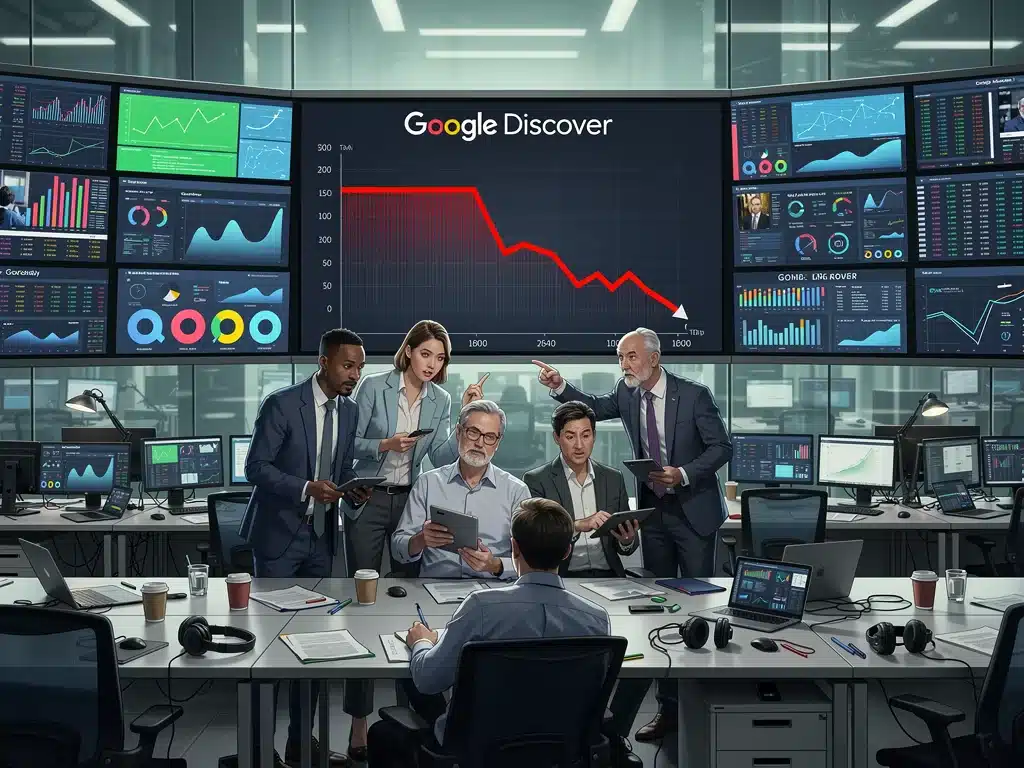
Are you relying on personalized content feeds to power your newsroom’s digital audience growth? A dramatic 35% traffic shift in Google Discover referral patterns is forcing mainstream publishers to confront an unpredictable distribution ecosystem.
Algorithmic recalibrations, AI summaries, and localized ranking signals have disrupted core referral channels overnight. With zero-click interfaces and feed updates throttling referral clicks, digital editors are scrambling to replace passive recommendation loops with sustainable direct reader engagement.
We examine audience behavior analytics, newsroom adaptation strategies, and essential traffic diversification tactics. Read on to discover how modern media companies can navigate algorithmic volatility and protect digital publishing revenue.
The 35% Traffic Shift: An Immediate Impact on National News Desks
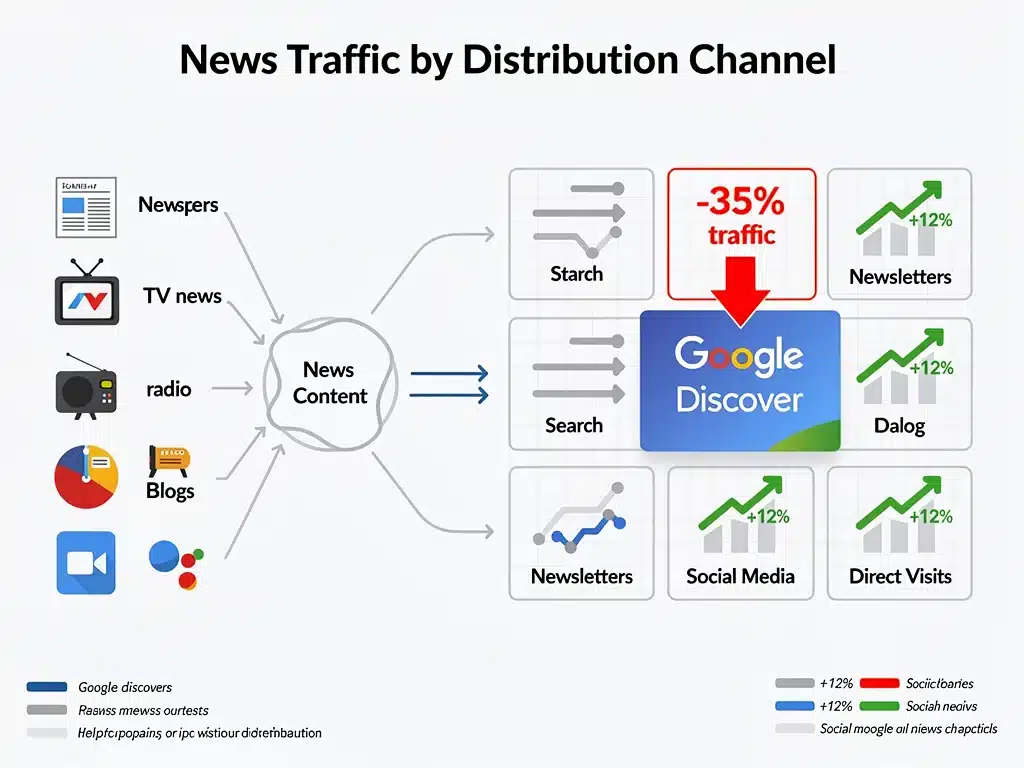
National news desks across the United States are currently grappling with a significant 35% traffic reduction originating from Google Discover. This abrupt shift has prompted an urgent re-evaluation of digital content strategies and audience engagement models within the publishing industry.
The change, which became evident over recent months, signifies a critical juncture for publishers heavily reliant on this particular traffic source. Understanding the nuances of this shift is paramount for maintaining readership and sustaining digital operations.
Initial reports indicate that the impact is widespread, affecting a diverse range of national news outlets, from large established publications to smaller, niche news providers.
The question of Is Google Discover Still Viable? is now central to editorial and business discussions.
Unpacking Google Discover’s Role in News Distribution
Google Discover has historically served as a vital, often unpredictable, source of traffic for news publishers, offering a personalized content feed to users based on their interests and search history.
Its algorithm, designed to anticipate user preferences, provided a unique avenue for content discovery outside traditional search queries.
For many national news desks, Google Discover represented a significant portion of their referral traffic, contributing to page views and overall audience reach. The platform’s ability to surface evergreen content alongside breaking news made it an invaluable tool for diverse content distribution.
The question of Is Google Discover Still Viable? underscores the vulnerability of relying heavily on any single third-party platform for traffic acquisition. Diversification remains a key strategy for long-term sustainability.
The Algorithm’s Evolution and its Consequences
Google’s continuous refinement of its algorithms is a constant in the digital landscape, often leading to shifts in content visibility and traffic patterns. The latest adjustment appears to have significantly altered how news content is prioritised and displayed within Discover feeds.
Speculation within the industry points towards an increased emphasis on different content signals or perhaps a re-evaluation of what constitutes ‘personally relevant’ news. This recalibration has directly contributed to the observed 35% drop in referral traffic.
- Algorithm updates often favour fresh, authoritative content.
- User engagement metrics may play a more significant role.
- The shift could reflect Google’s broader strategy for content curation.
The implications for publishers are substantial, forcing a re-evaluation of content creation and optimisation strategies for platforms like Google Discover.
Strategic Responses from National News Desks
In response to the sharp decline, national news desks are actively exploring and implementing new strategies to mitigate the impact of the reduced Google Discover traffic. This involves a multi-faceted approach focusing on owned channels and diversified distribution.
Many publishers are bolstering their direct audience engagement efforts, including newsletter subscriptions, app downloads, and social media presence. The goal is to build stronger direct relationships with readers, reducing dependence on external platforms.
Furthermore, there is a renewed focus on traditional SEO and organic search visibility, ensuring that content ranks well for relevant keywords. The viability of Google Discover is now being assessed against these more stable traffic sources.
Diversifying Traffic Sources Beyond Discover
The current traffic shift serves as a stark reminder of the importance of a diversified traffic acquisition strategy. Publishers are now aggressively pursuing multiple channels to ensure robust audience reach.
This includes optimising for various social media platforms, investing in video content, and exploring partnerships with other content aggregators. The aim is to create a resilient ecosystem for news distribution that is less susceptible to single-platform algorithm changes.
- Investing in email newsletters for direct audience connection.
- Strengthening social media presence and engagement.
- Exploring syndication opportunities with other news platforms.
The long-term health of national news desks depends on their ability to adapt and innovate in this evolving digital landscape, moving beyond reliance on Google Discover.
Reassessing Content Strategy for Discoverability
The 35% traffic shift from Google Discover necessitates a critical reassessment of content strategy, particularly concerning how news articles are crafted for maximum discoverability. Publishers are now scrutinising every aspect of their content production.
This includes examining headline optimisation, image selection, and the overall structure of articles to align with potential new algorithmic preferences. The goal is to make content more appealing to a broader range of distribution channels, not just Discover.
The question of Is Google Discover Still Viable? is prompting a deeper dive into audience analytics. Understanding what content resonates with users on different platforms is crucial for informed decision-making.
Optimising for Broader Algorithmic Signals
Beyond Google Discover, publishers are focusing on optimising for broader algorithmic signals that influence visibility across the entire Google ecosystem. This includes core web vitals, mobile-friendliness, and overall site performance, which contribute to a positive user experience.
Content quality and authority are also paramount, with an emphasis on original reporting, factual accuracy, and expert sourcing. These foundational SEO principles are becoming even more critical in a post-Discover-shift environment.
- Prioritising high-quality, original journalism.
- Ensuring technical SEO best practices are meticulously followed.
- Focusing on user experience metrics for better overall ranking.
The aim is to create content that is not only compelling but also technically sound and algorithmically friendly across all potential touchpoints.
The Long-Term Viability of Google Discover for News
The substantial traffic reduction has undoubtedly raised questions about the long-term viability of Google Discover as a consistent and reliable traffic source for national news desks. Publishers are now weighing its potential against other platforms.
While Discover still provides some traffic, its diminished contribution forces a recalibration of expectations and resource allocation. The investment in optimising for Discover might be shifted towards channels offering more predictable returns.
The ongoing analysis of Is Google Discover Still Viable? will determine its future role in publishers’ digital strategies. Adaptability is key in this dynamic environment.
Adapting to a Less Predictable Landscape
Publishers must embrace a less predictable digital landscape, where reliance on any single platform carries inherent risks. Building a robust, diversified strategy is no longer optional but a necessity for survival and growth.
This adaptation involves continuous monitoring of analytics, agile content production, and a willingness to experiment with new distribution models. The lessons learned from the Google Discover shift will inform future decisions.
- Continuous monitoring of traffic sources and performance.
- Agile content production to respond to platform changes.
- Experimentation with emerging distribution channels.
The industry is moving towards a more independent and resilient model, with direct audience relationships at its core, as the viability of Google Discover continues to be debated.
Case Studies: National News Desks in Action
Several national news desks have publicly shared initial responses and internal adjustments following the Google Discover traffic shift. These case studies offer valuable insights into practical strategies being deployed.
One major publisher reported an increased investment in their proprietary news app and a significant boost in newsletter sign-ups, directly countering the Discover decline. Another focused on geo-targeted content to enhance local search visibility.
These examples highlight the diverse approaches being taken to address the challenges posed by the question: Is Google Discover Still Viable?.

Lessons from Early Adaptors
Early adaptors among national news desks are demonstrating that proactive measures can mitigate the impact of such traffic shifts. Their strategies often involve a combination of technical adjustments and editorial pivots.
Key lessons include the importance of a strong brand identity, consistently high-quality journalism, and a deep understanding of audience behaviour across multiple platforms. This holistic approach builds resilience against external changes.
- Strong brand identity fosters direct audience loyalty.
- High-quality journalism remains the cornerstone of trust.
- Understanding multi-platform audience behaviour is crucial.
The experiences of these publishers provide a roadmap for others navigating the complex aftermath of the Google Discover traffic reduction.
The Future of Digital News Distribution
The 35% traffic shift from Google Discover serves as a clear indicator of the evolving landscape of digital news distribution. The future will likely see a continued emphasis on diversification and direct audience engagement.
Publishers are increasingly aware that relying on a single platform for a significant portion of their traffic is unsustainable. The conversation around Is Google Discover Still Viable? will shape future investment in technology and content.
Innovation in audience analytics, personalised content delivery, and new monetisation models will be critical for national news desks to thrive in this dynamic environment. The industry is moving towards greater self-reliance.
Emerging Trends in Audience Engagement
Beyond traditional channels, emerging trends in audience engagement are gaining traction, offering new avenues for publishers to connect with readers. These include interactive content, audio journalism, and community-driven platforms.
The focus is shifting towards creating immersive experiences that foster deeper connections and encourage repeat visits. This proactive approach aims to build loyal communities that are less susceptible to external traffic fluctuations.
- Interactive content enhances user participation and retention.
- Audio journalism caters to diverse consumption habits.
- Community platforms build loyalty and direct engagement.
As publishers continue to assess Is Google Discover Still Viable?, these emerging trends offer promising pathways for sustainable growth.
| Key Point | Brief Description |
|---|---|
| Traffic Decline | Google Discover traffic to national news desks reduced by 35%. |
| Publisher Response | News desks are diversifying traffic sources and refining content strategies. |
| Discover Viability | The long-term reliability of Google Discover as a primary source is under review. |
| Future Outlook | Emphasis on direct engagement and platform diversification for sustainable growth. |
Frequently Asked Questions About Google Discover Traffic
The precise cause is Google’s ongoing algorithm updates, which continuously refine how content is prioritised and displayed. Industry experts suggest a recalibration of what constitutes ‘personally relevant’ content, impacting news visibility and leading to the significant traffic reduction.
While Google Discover still contributes some traffic, its viability as a primary or highly reliable source is now under intense scrutiny. Publishers are re-evaluating its role and shifting focus towards more stable and diversified traffic acquisition strategies to reduce dependence.
News desks are implementing multi-faceted strategies, including bolstering direct audience engagement through newsletters and apps, enhancing traditional SEO efforts, and diversifying content distribution across various social media and syndication platforms. The goal is to build resilience.
Publishers should focus on high-quality, original journalism, robust technical SEO, and an excellent user experience across their owned platforms. Diversifying content formats and understanding audience behaviour on multiple channels will also be crucial for improved discoverability.
Predicting a full recovery is challenging given Google’s continuous algorithmic evolution. Publishers should assume the current landscape is the new normal and adapt accordingly. Strategic adjustments, rather than waiting for a recovery, are the most prudent approach for sustaining digital operations.
Impact and Implications
The 35% traffic shift from Google Discover represents a significant inflection point for national news desks. It underscores the critical need for publishers to cultivate robust, diversified digital strategies that minimise reliance on any single third-party platform.
The ongoing analysis of Is Google Discover Still Viable? will undoubtedly shape future investment in technology, content, and direct audience engagement.
Publishers must now focus on building resilient ecosystems capable of thriving amidst continuous algorithmic evolution and shifting user behaviours, prioritising owned channels and direct reader relationships above all else.