Avatar Etiquette in 2026: 5 New Unwritten Rules Governing Spatial Computing Spaces Across the United States
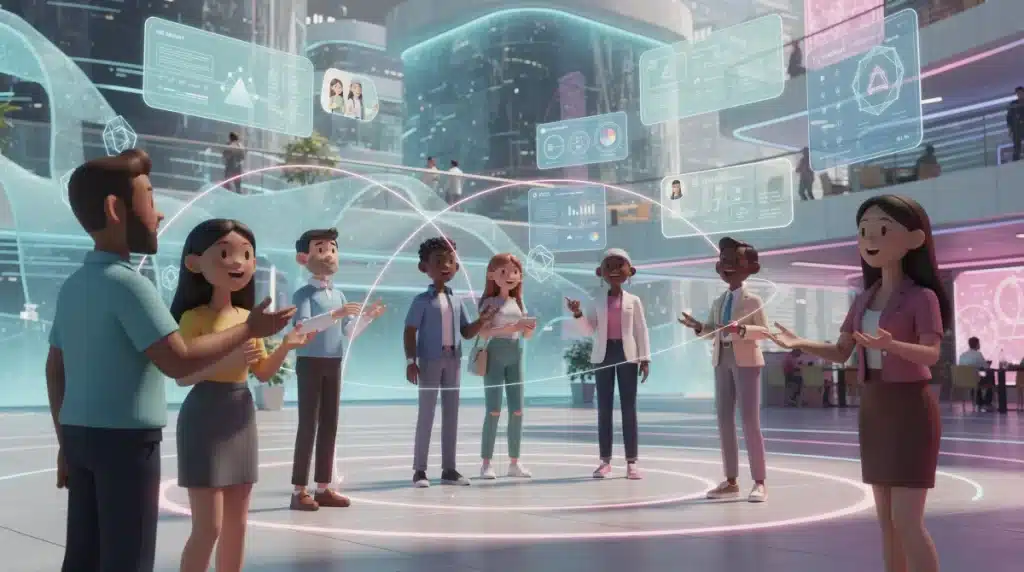
Ever had a digital persona invade your personal bubble mid-meeting or float uninvited into a shared 3D workspace? Practicing Avatar Etiquette 2026 helps users navigate immersive mixed-reality rooms smoothly as spatial computing moves from novelty headsets into everyday work and social hangouts across the U.S.
Respecting virtual personal space, reading eye-tracking and gesture cues, and honoring personal-boundary toggles prevent awkward collisions in shared environments.
Clear norms around audio muting, recording consent, and persona expression keep collaborative sessions focused rather than distracting.
Whether you join 3D team huddles, virtual events, or mixed-reality lounges, small courtesy habits set the tone for every session. Here are five unwritten social rules and platform guardrails to watch next.
The Rise of Proximity Awareness in Virtual Spaces
One of the most significant unwritten rules revolves around proximity awareness, which dictates how close avatars should stand to one another.
In 2026, this concept mirrors real-world personal space, but with added layers of digital interpretation. Users are expected to respect virtual boundaries, avoiding ‘avatar crowding’ unless explicitly invited.
This rule is particularly pertinent in public spatial computing spaces, such as virtual concert venues, meeting rooms, or digital marketplaces.
Unsolicited close proximity can be perceived as intrusive or aggressive, leading to negative social consequences. Platforms are beginning to implement subtle visual cues to help users gauge appropriate distances.
The evolution of this rule stems from early user feedback regarding discomfort in overly dense virtual environments. As reported by leading VR experience designers, a sense of personal space, even if virtual, is critical for user comfort and immersion.
This reflects a maturation in the understanding of human psychology within digital realms, directly impacting avatar etiquette in 2026.
Defining Personal Space in Spatial Computing
- Dynamic Boundaries: Personal space is not fixed; it adjusts based on context (e.g., a private conversation versus a public gathering).
- Visual Cues: Users often rely on subtle avatar animations or platform-provided visual indicators to signal their comfort zones.
- Respectful Interaction: Approaching an avatar too quickly or without invitation is widely considered a breach of etiquette.
The implications for developers are clear: design spatial computing environments that facilitate intuitive understanding of personal space. This includes features like adjustable personal bubbles or visual indicators that gently push avatars apart.
The success of social platforms now hinges on their ability to foster comfortable and respectful interactions, a core tenet of avatar etiquette in 2026.
Non-Verbal Communication: Beyond the Chatbox
The second unwritten rule highlights the increasing importance of non-verbal communication through avatar gestures, expressions, and body language.
As avatars become more sophisticated, mirroring human nuances, users are expected to utilise these features to convey intent and emotion, reducing reliance on text-based communication. This is a critical aspect of avatar etiquette in 2026.
This shift moves beyond simple emotes to more complex, real-time avatar animations that reflect a user’s physical movements or chosen emotional states.
Misinterpreting or neglecting these cues can lead to misunderstandings, akin to ignoring someone’s body language in a face-to-face conversation. The richness of interaction is directly tied to this new form of expression.
According to a recent study by the Institute of Digital Anthropology, approximately 60% of meaning in spatial computing interactions is now conveyed through non-verbal avatar actions.
This underscores a profound evolution from earlier text-heavy virtual worlds. Mastering this aspect is fundamental to good avatar etiquette in 2026.
The Language of Avatar Gestures
- Contextual Gestures: Waving, nodding, and pointing carry specific meanings that must be used appropriately within the virtual context.
- Emotional Expressions: Avatars capable of displaying facial expressions require users to be mindful of how their chosen emotion is perceived by others.
- Active Listening: Showing engagement through avatar head nods or attentive postures is crucial for respectful dialogue.
Platforms like Meta Horizons and VRChat have seen a dramatic increase in user-generated content focused on expressive avatar customisation.
This reflects a user-driven demand for more nuanced communication, a trend that solidifies non-verbal cues as a cornerstone of avatar etiquette in 2026. Training new users in these subtle communication methods is becoming a standard practice.

The Unspoken Rules of Avatar Appearance and Identity
The third unwritten rule addresses the unspoken expectations surrounding avatar appearance and the representation of identity. While freedom of expression remains paramount, there are growing norms about respectful and context-appropriate avatar design.
This extends beyond basic decency to cultural sensitivity and the avoidance of disruptive or offensive portrayals within specific spatial computing communities. This is a nuanced but vital part of avatar etiquette in 2026.
Users are increasingly expected to consider the impact of their avatar’s appearance on others, especially in diverse public spaces. What might be acceptable in one niche community could be highly inappropriate or even offensive in another.
This requires a heightened sense of awareness and empathy from users, particularly regarding cultural symbols or sensitive imagery. The concept of ‘digital blackface’ or appropriation is now a significant concern.
As reported by the Digital Rights Foundation, platforms are struggling to balance freedom of expression with the need to prevent harassment and promote inclusive environments.
This tension gives rise to these unwritten rules, which often precede formal content policies. Adherence to these norms is a key indicator of good avatar etiquette in 2026.
Navigating Identity Representation
- Contextual Appropriateness: An avatar suitable for a fantasy RPG might be out of place in a professional virtual conference.
- Cultural Sensitivity: Avoiding stereotypes or appropriation of cultural symbols is crucial for respectful interaction.
- Disruptive Avatars: Overly large, bright, or glitchy avatars that hinder others’ experience are generally frowned upon.
The challenge for users is to understand the social contract of each spatial computing space they enter. Many communities now have informal guidelines or community moderators who enforce these unwritten rules. This self-regulation is a hallmark of evolving avatar etiquette in 2026 as platforms mature and users demand more respectful environments.
Respectful Engagement: Avoiding Digital Disruptions
The fourth new unwritten rule focuses on respectful engagement and the avoidance of digital disruptions. This encompasses actions that intentionally or unintentionally detract from the experience of other users.
Examples include ‘griefing’, ‘spamming’ with unwanted objects or sounds, and ‘mic-hogging’ in shared audio spaces. These behaviours are now severely frowned upon and can lead to ostracisation or reporting. This forms a critical part of avatar etiquette in 2026.
In immersive spatial computing environments, disruptions are far more impactful than in traditional 2D interfaces. An intrusive avatar or a constant barrage of noise can break immersion, causing genuine frustration and even digital motion sickness for some users.
The collective enjoyment of these spaces relies heavily on individual responsibility to maintain a harmonious atmosphere.
According to industry analysts at Virtual World Insights, platforms that successfully curb disruptive behaviours tend to retain users longer and foster stronger communities. This highlights the commercial as well as social importance of this unwritten rule.
Promoting positive interaction is central to the success of spatial computing. This is a core element of avatar etiquette in 2026.
Maintaining a respectful presence involves being mindful of one’s digital footprint and how it affects others. This includes managing audio input, being aware of visual effects emanating from one’s avatar, and participating constructively in group activities.
These seemingly small actions collectively shape the quality of the virtual experience for everyone involved. Adherence to this is a key aspect of avatar etiquette in 2026.
Minimising Digital Interference
- Audio Management: Using push-to-talk or muting microphones when not speaking is a common courtesy.
- Visual Clutter: Avoiding excessive particle effects or animations that obscure others’ views.
- Spatial Awareness: Not blocking pathways or obstructing interactive elements for other users.
Platform developers are increasingly providing tools for users to manage their environment, such as muting individual avatars or adjusting visual effects.
However, the primary responsibility lies with the user to exercise good judgment. The evolving nature of avatar etiquette in 2026 places a greater emphasis on self-regulation and community accountability.

Data Privacy and Digital Consent in Shared Spaces
The fifth and perhaps most complex unwritten rule concerns data privacy and digital consent within shared spatial computing spaces. As these environments become more sophisticated, they often collect vast amounts of data on user behaviour, interactions, and even biometric inputs.
The expectation is that users will respect others’ data privacy and seek consent for any recording or broadcast of their avatars or conversations. This is a critical component of avatar etiquette in 2026.
This rule extends beyond formal platform policies, delving into the ethical considerations of sharing virtual experiences.
Users are now more aware of who might be recording their interactions, whether for personal use, streaming, or content creation. Unauthorised recording or broadcasting of another avatar without explicit permission is a significant breach of trust and etiquette.
According to legal experts specialising in digital rights, the lines between public and private spaces blur significantly in spatial computing.
While a public virtual square might seem open, the expectation of privacy for individual conversations or interactions remains high. This nuanced understanding is fundamental to good avatar etiquette in 2026.
The concept of digital consent is still evolving, but the unwritten rule dictates a proactive approach: if in doubt, ask for permission.
This fosters a safer, more trusting environment where users feel comfortable expressing themselves without fear of unwanted surveillance or public exposure. This is an essential pillar of avatar etiquette in 2026.
Safeguarding Virtual Interactions
- Recording Consent: Always ask permission before recording or streaming another avatar’s likeness or voice.
- Data Sharing Awareness: Be transparent if your avatar is linked to data collection for research or commercial purposes.
- Privacy Settings: Respecting others’ chosen privacy settings within a spatial computing platform.
The rapid advancement of AI and data capture technologies within spatial computing makes this unwritten rule increasingly vital.
Users must educate themselves on platform capabilities and exercise caution, while platforms must provide clear tools for managing consent. This balance will define the future of ethical interaction and avatar etiquette in 2026.
| Key Rule | Brief Description |
|---|---|
| Proximity Awareness | Respecting virtual personal space and avoiding unwanted avatar crowding. |
| Non-Verbal Communication | Utilising avatar gestures and expressions to convey intent and emotion respectfully. |
| Avatar Appearance & Identity | Designing avatars that are context-appropriate and culturally sensitive. |
| Respectful Engagement | Avoiding digital disruptions like griefing, spamming, and mic-hogging. |
Frequently Asked Questions About Avatar Etiquette in 2026
Spatial computing refers to technology that allows digital information to interact with the physical world, or to create entirely new, immersive digital environments. This includes virtual reality (VR), augmented reality (AR), and mixed reality (MR) systems, where users often interact via digital avatars. These spaces are where the new avatar etiquette in 2026 applies.
These rules are ‘unwritten’ because they emerge organically from user behaviour and community consensus, rather than being formal, codified platform policies. They are social norms that develop over time as users learn what fosters positive interactions and what causes friction. However, they are becoming as important as written rules for good avatar etiquette in 2026.
New users can learn these rules by observing experienced users, participating in community forums, and reviewing platform-specific guides or tutorials. Many spatial computing platforms also offer onboarding experiences that subtly introduce these social norms. Active engagement and respectful observation are key to mastering avatar etiquette in 2026.
While the general principles of avatar etiquette in 2026, such as respecting personal space, are broadly consistent, their specific application can vary between platforms and individual communities. For instance, a casual social VR game might have looser rules than a professional virtual meeting space. Context is always crucial for understanding the nuances.
Consequences can range from social ostracisation and negative reputation within a community to being reported to platform moderators. In severe cases, repeated breaches of avatar etiquette in 2026 can lead to temporary suspensions or permanent bans from specific spatial computing environments. Adhering to these norms is vital for continued participation.
Perspectives
The establishment of Avatar Etiquette in 2026 marks a crucial evolutionary stage for digital interaction. These emerging norms reflect a growing maturity in how individuals engage within immersive virtual worlds.
As spatial computing continues its expansion, observing these unwritten rules will be paramount for fostering inclusive, respectful, and ultimately more enjoyable digital communities.
The ongoing development of these guidelines will shape the very fabric of future online socialisation and commerce, demanding continued attention from users and developers alike.